EASY ACTIVITIES TO BUILD YOUNG BRAINS: TASTY LETTER RECOGNITION GAME.

O is a vital letter in the English language, and yet it rarely starts common words (indeed the worlds that we often think of are far more closely related to their Greek origins than most of the words we use in common language – ie octagon, octopus, ox etc) There are a number of O words that we may use as parents and teachers (ie organized, oblivious or even obnoxious… yes, I have been found trying to explain the meaning of obnoxious to my 5yo at those trying times!) but still, very few words that most young children will naturally say when compared to other letters.

IMG_4984

This activity is intended to highlight the importance of the letter O in our language, even if it is not at the beginning of a great deal of words.

Simply choose any book with a large font. (We used a Maisy book with lift the flap fun.) Hand your child some Cheerios and get them to label each O with a Cheerio.

(Alternatively if you would rather avoid Cheerios in your life then you can photocopy a book and have them highlight the letter O – but in our house Cheerios are quite novel so they are a very exciting O shaped dry snack – the kids have no idea that they are meant to be consumed with milk for breakfast!)

For early readers you can talk about the different sounds that O makes when influenced by other letters, for younger children simply identifying the O among the other rounded letters will be enough excitement and challenge.

Of course you can then check that they have found all the Os by reading the page, and eating the Cheerios as you get to each word with an O. Have fun reading!

INTRODUCING THE LETTER O

Keeping with our watery theme we’re moving onto Octopuses in the Ocean. We’re also getting a bit of a taste for the concept of an omnivore, and getting our big history in check as we come to terms with that long period of ‘the olden days’ (Dinosaurs to daddy’s childhood!)

Letter: O

Creature: Octopus

Country: Oman

Focus learning areas: Oceans and the “olden days” (big history concepts)

In the following posts I will detail more activities surrounding each of these areas, but for now simply pop your O printables (from earlier, find them here) in your mail box ready for your little one to discover their new letter!

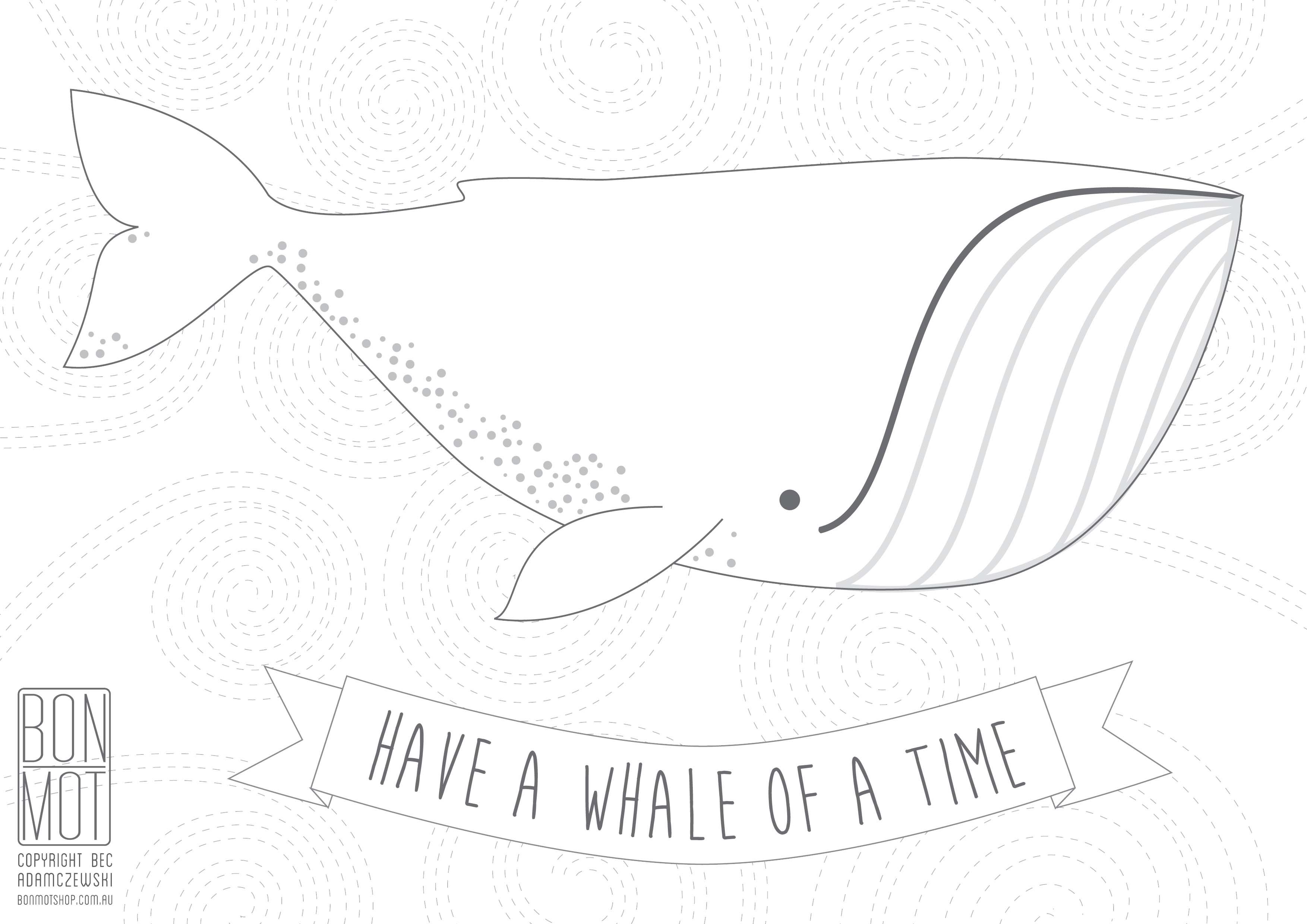
W – IS FOR FREE WHALE COLOURING FROM TASSIE ILLUSTRATOR!

Print

To finish off our week of W we have a free designer whale printable for your young tot (from the super talented Tasmanian children’s illustrator, Bec Adamczewski of Bon Mot.) You can download the free printable PDF here:

Whale_colour

(Simply download, print and get to work!)

If you’d like to meet this illustrator in the flesh (and maybe grab a few of her wears to spice up your tot’s space!) then get on down and meet her at your local market:

  • Hobart Twilight Market 4pm-8pm February 20
  • Barn Market 10am-3pm March 1
  • Niche Market Bazaar 9am-3pm March 28 (Launceston)

In the mean time (if your love her work and just can’t wait that long to see more!) then you can always find her work virtually:

Shoot on over to Facebook and send her a Like to keep up to date with what she’s creating, and to say a big thank you for sharing this lovely work with us and our tots!

Enjoy your colouring and look forward to seeing you for the letter O next.

EASY ACTIVITIES TO BUILD YOUNG BRAINS: WINDOW WONDERLAND.

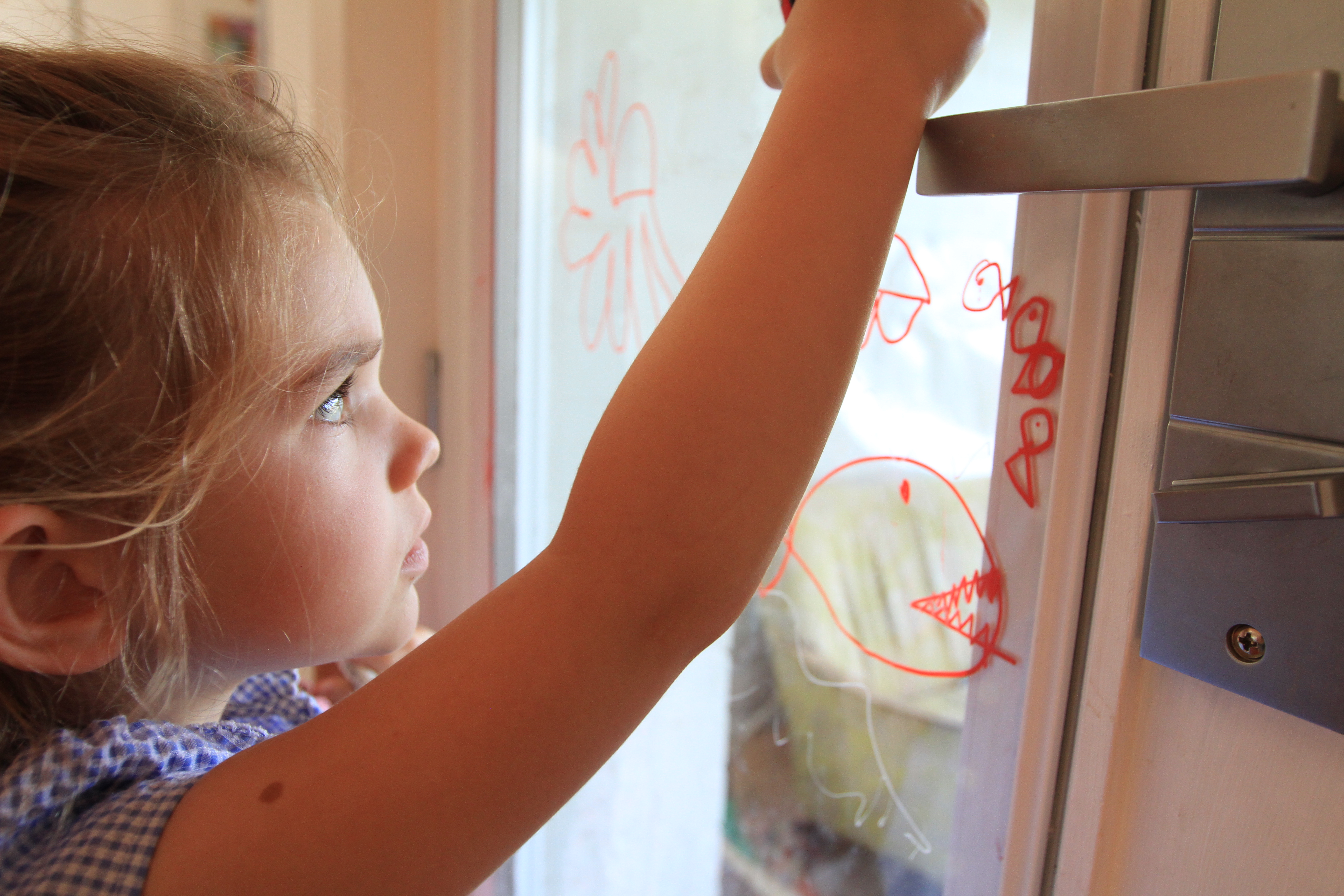
Transform a window into a wonderful water wonderland that can house all your sea creatures.

IMG_4910

What you will need:

  • Cellophane (blue)
  • Tape
  • Scissors
  • Whiteboard markers (or we used chalk pens, the kind they use to write menus – there are a good selection to choose from at Artary)

Hand your children a ‘special window pen’ (and in our part of the world it’s important that we make that definition – drawings tend to ‘creep’ here!) Talk about all the things they might like to draw in their watery wonderland. Do they want to draw a seahorse like last week? How many legs do crabs really have? Where is that fish swimming to? (While drawing you may like to show them images of the creatures that they are drawing to assist them in ‘seeing’ rather than simply representing with the symbols they have learnt represent particular features – though if your fish still needs a belly button and a nose to be complete, then let them go for it!)

IMG_4920

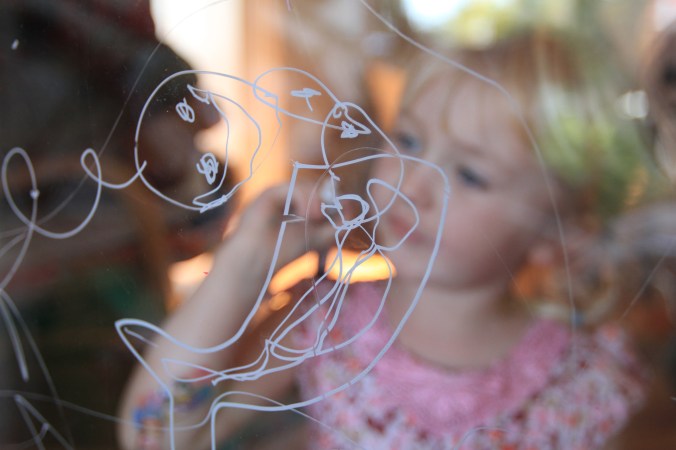
After the artwork is complete simply tack your cellophane waves to the window (overlapping looks great as it gives various shades of blue). On a sunny day this will give blue light to your room, with little shadows of their drawings – it is quite sweet to see.

Once you have finished take a photo of your young tots from the other side of the window so they can see themselves ‘swimming’ in the water. (Seeing ourselves is an important part of developing self-reflection – plus they will think it’s a hoot!)

EASY ACTIVITIES TO BUILD YOUNG BRAINS: PAINTING A PAPER PLATE WHALE.

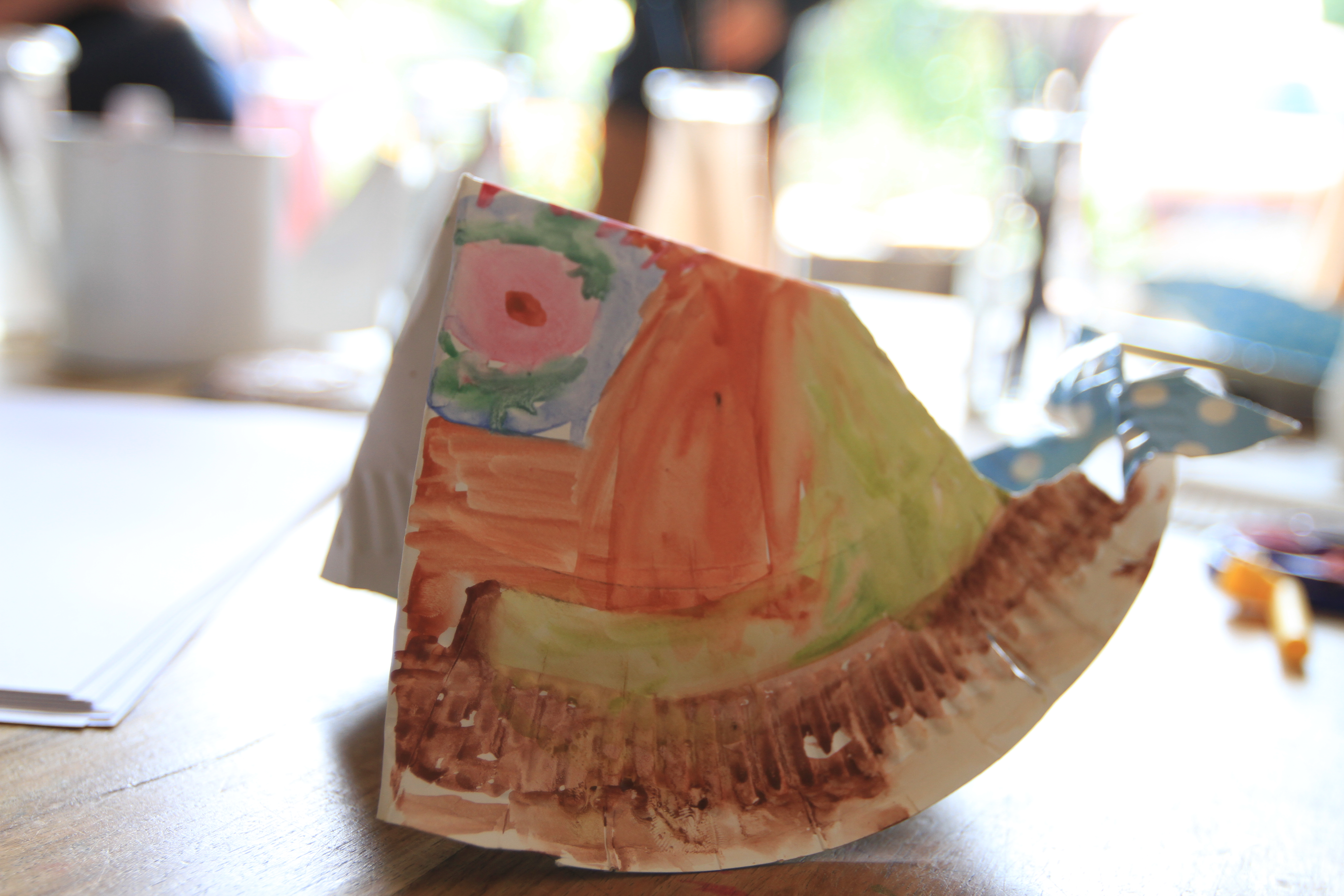
We’re looking at Whales at the moment, and this is a sweet little project you can do one afternoon, (if you’re up for something a bit more challenging have a go at making your own giant box whale sculpture!)

IMG_4731

For this little exercise you will simply need a paper plate and a pair of scissors.

  • Fold your plate around 1 third of the way across the plate (this will be the whale’s somewhat flat head!)
  • Turn your plate 90degrees and fold down the middle of the plate (this will form the ridge of the back, feel free to add a blow hole later if you so wish!)
  • From about half way along the body, cut the curve of the back towards the tale (imagining how a whale back curves down then back up to it’s tail) Don’t cut all the way to the end!

IMG_4730

  • Instead of cutting the tail off, make your brain do some Olympics and cut a half tail facing back towards the whales back.  (When you unfold the tail away from the body you will have an open tail that moves up and down (like a whale) rather than side to side (like a fish).
  • Bend your tale out and paint/decorate as you wish

IMG_4727

EASY ACTIVITIES TO BUILD YOUNG BRAINS: MULTI-SCHOOL GIANT WHALE PROJECT.

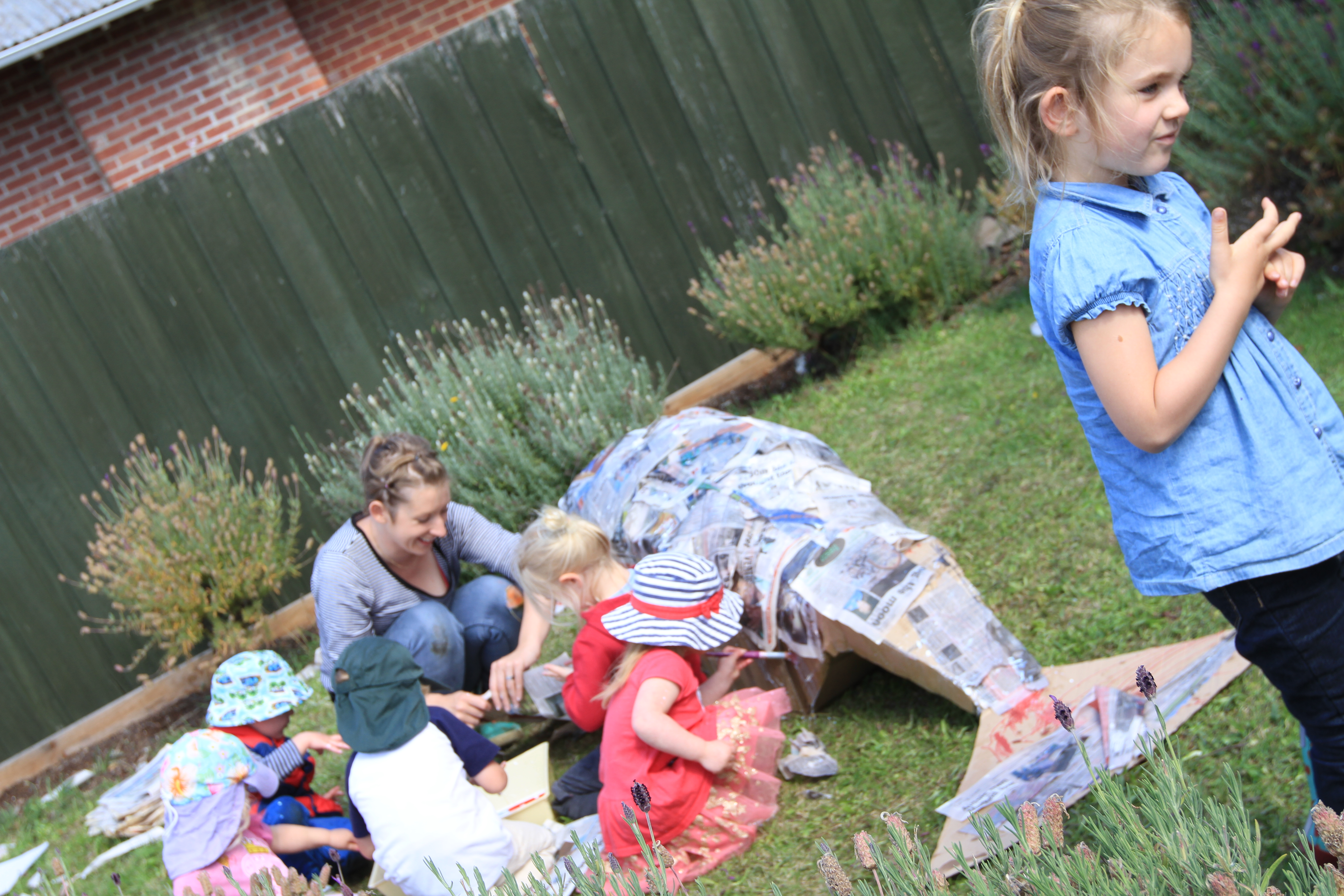
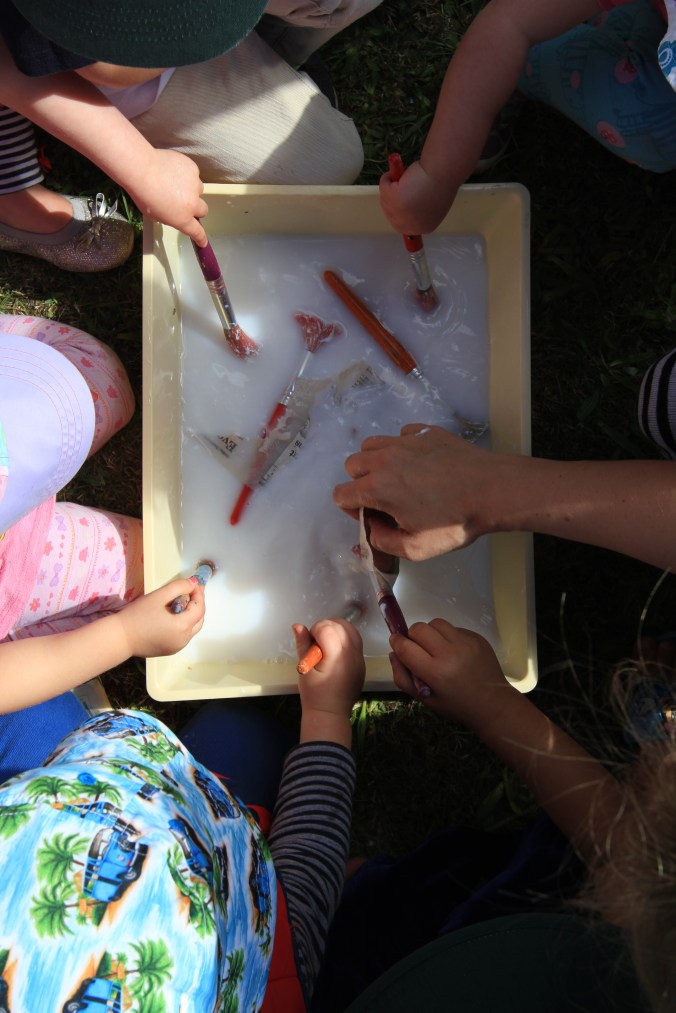
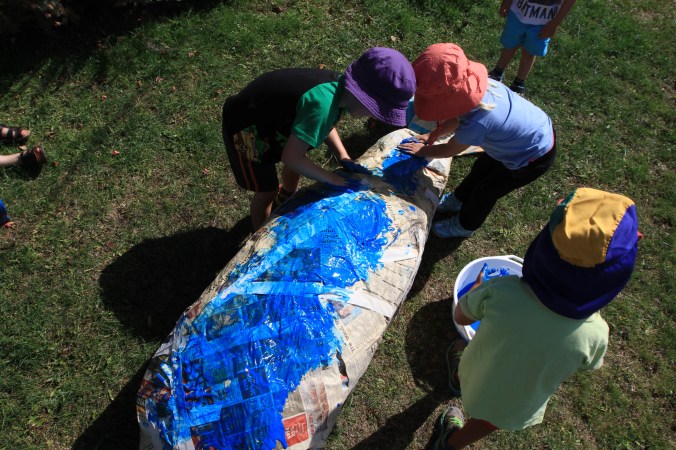
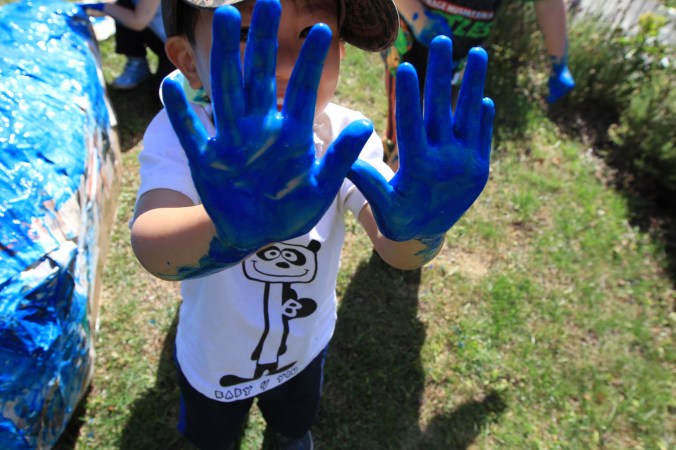
This is a not quite as big as a real blue whale, but it certainly is a monster project (unless you are working with a large group, or have an enthusiastic marine biologist on your hands, you may like to scale this one back a little – the Blue Plate Whale is a smaller one to do at home!) IMG_4661 First, fashion a ‘box whale’ from a few cardboard boxes and lots of packing tape. The exact shape of your whale will be determined by your boxes, but we found it far easier than initially imagined to make the basic whale shape. (We also used some packing to help support the inside of the shape, though this was more about what happened to be in our boxes rather than something you need to seek out.) We then had a little more ‘softening’ to do before our box looked truly like a whale. We scrunched newspaper and taped this down with sheets of paper (like wrapping a big newspaper present!). We did this in any places our whale needed a few more ‘curves.’ IMG_4649 Once the shape is achieved mix 1part water ; 1 part PVA glue in a tray. Tear paper into more manageable pieces and dip in the glue before placing over your whale. Aim to overlap your paper for strength and cover as much of the whale as possible. (Our young sculptors were not so focused on the idea of overlapping for strength, but their enthusiasm for covering the top of the whale meant that it happened anyway!) Your whaled dry time will be different depending on the thickness of your layers. Ours took about 4-6 hours to dry on a sunny day. IMG_4926 Once dry we painted our whale (blue of course!) and the squelchy squashy finger paint was a hit, as always. IMG_4930 This particular whale will then visit my 5yos Prep class soon, for a little more decoration and as they are investigating sea creatures at the moment, it will then come back to us for an under the sea birthday party, and then find it’s home at the daycare centre – not bad for a bit of news paper, a few old boxes and lots of little enthusiastic hands!

THINGS TO SEE AND DO: JOURNEY TO THE CENTRE OF THE WORLD!

Well that’s a slight exaggeration, but Hastings caves does reach a good long way into the crust of our world (we’re not really going to get anywhere near the core… but it’s a great adventure in to the depth of our planet never the less!)

IMG_4608

Newdegate Cave is around 1.5hrs – 2hrs drive from Hobart and is remarkably the largest tourist cave in Australia which occurs in dolomite, rather than limestone. Its richly decorated chambers began forming tens of millions of years ago (great for bringing in those Big History concepts on your young ones timeline) and is formed by water! (Showing the immense power of water – in an entirely different way to the power of water in our recent water wheel investigation!)

IMG_4543

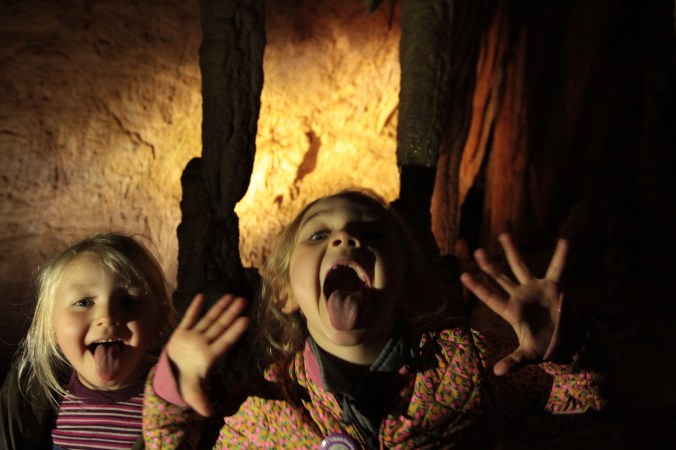
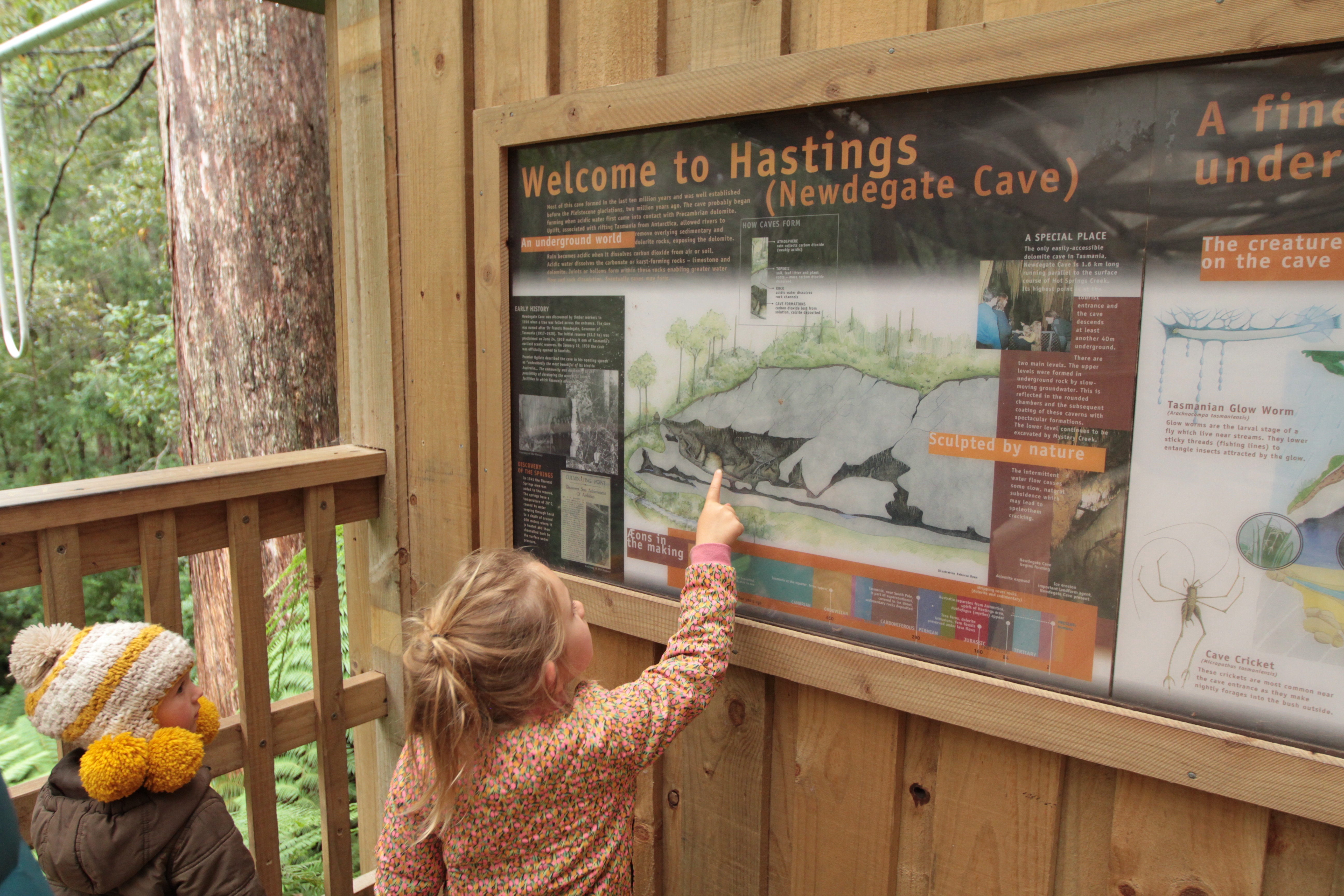
During the walk to the cave the excitement built, and the kids were keen to read and learn everything they could about the caves. As we waited for the tour guide we looked at the map and tried to think of what could have made such a big hole. This is Anica’s face when she learnt it was water that created the giant caves that we were about to enter.

IMG_4565

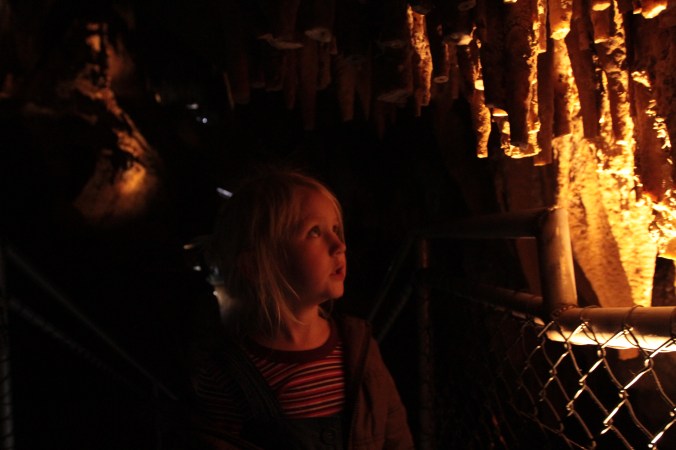
Once inside with our small tour group the crystal cave was beautifully lit and totally captured the imagination of the kids. The guide explained how the stalactites and stalagmites were formed, and answered questions as we moved though the upper section of the cave. (The cave is considerably deeper than the public are able to explore, but the 45min tour was perfectly timed for us and we were very happy to see the amazing sights in the public areas of the cave.)

IMG_4562

We were also lucky enough to see some critters inhabiting the caves (a rare occurrence) and with the help of our guide we managed to spot a small cave spider and a cave cricket. The caves and tour are very well run, and impressively they have a wealth of free printable educational sheets relating to the caves available here. Many of these sheets are a little old for my own youngsters, but I look forward to re-visiting the ideas when they are older.

IMG_4596

The caves are also near a hot (warm) spring that fills a pool that you can swim in during your visit. Unfortuantly a large tree had fallen over the boardwalk just before our visit, so the Hot Springs walks (where you can feel the water from the spring running joining the water from the creek) is closed until further notice while they repair the track, but a splash in the pool gave the kids a great concept of water coming up from the warmer parts of the earth as they could see where it entered the pool (warmed) and then left the pool to join the creek. (The staff when asked were very helpful at explaining this, and obviously possess a great deal of knowledge beyond simply selling park tickets!)

IMG_4548

Despite the daunting idea of a 3-4hour round trip to see the caves, I recommend inviting a few friends, bring a picnic, stop on the way and making a day of it – the cave tour followed by a swim in the warm springs was great fun, (and surprisingly relaxing!) way to spend a family day!

BAKING GEOGRAPHY (THE IMPORTANCE OF CAKE IN A CLASSROOM)

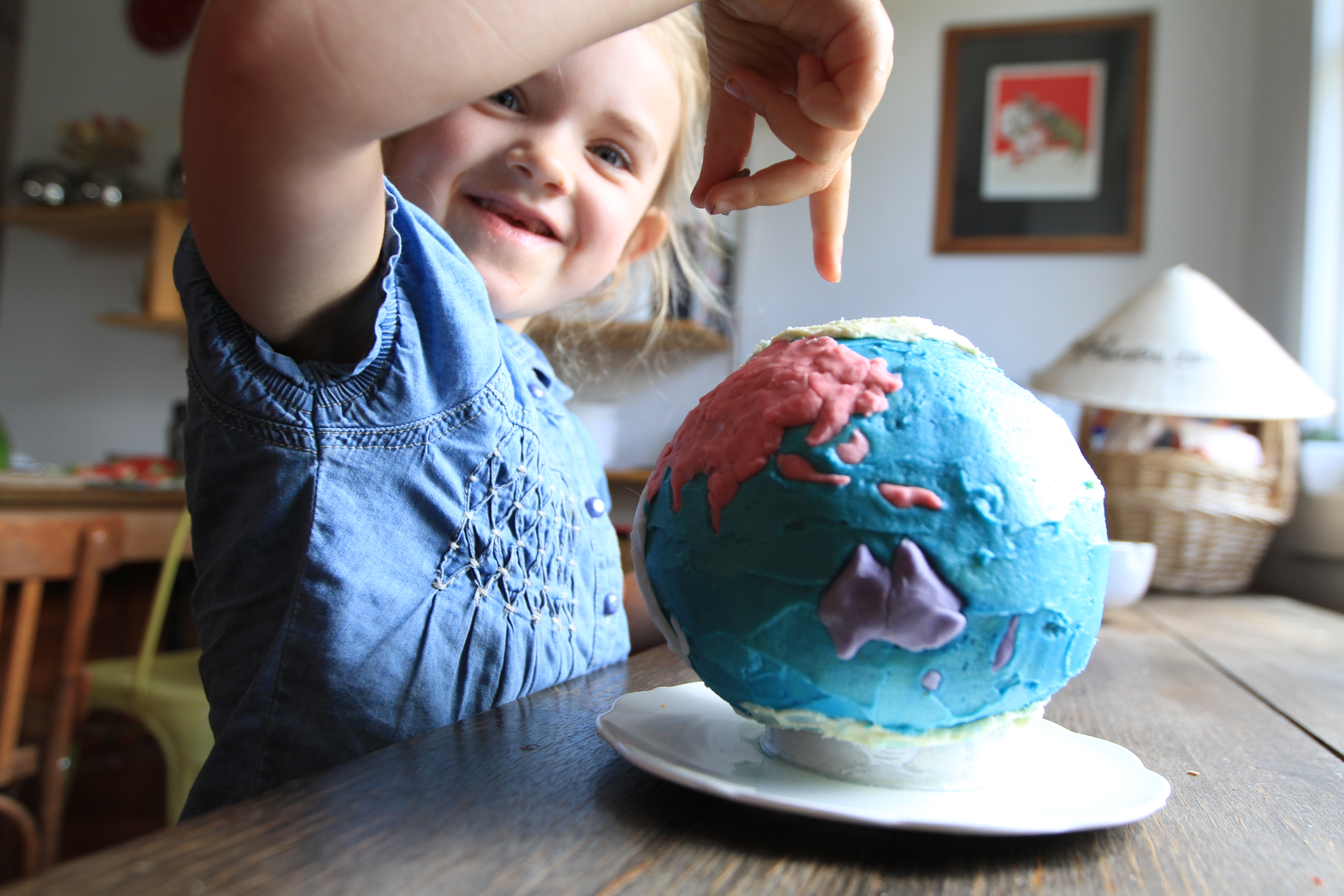
We’ve talked before about our mission to cook around the world, but in this case we are baking the actual world it’s self!

IMG_4688

To link in with our concepts surrounding volcanoes (inspired by our destination of the week; the volcanic islands Wallis and Futuna) we’ve been investigating the layers that make our world.

The inner core is the hottest (imagine the seed of a tick skinned fruit) the outer core is still darn hot, but a little cooler than the very centre (think of the flesh of your fruit) then there is the far thinner crust of solid, hard rock (imagine the skin of the fruit) and on top of that are all our oceans and islands. That’s our world in a fruity sense, but we decided it would have a more memorable impact on our learning to EAT CAKE!
IMG_4444IMG_4519

I’ve reflected a little in the past about the importance of a ‘Purple Cow’ approach applied to learning activities (that is, a thing so remarkable that you actually remake on it, and then by re-telling that exciting story you wire those nurons again and again). It’s a marketing concept (by marketing guru Seth Godin) combined with the brain science (best explained in easy reading books like The Whole Brain Child By Dan Siegel and Tina Payne Bryson). While you might not want to fill your kids up on sugar every time you learn a new concept, tossing in a ‘purple cow’ now and then (something they’ll be excited enough to talk about) will enhance their learning as well as bring a wide grin to their faces.
IMG_4313

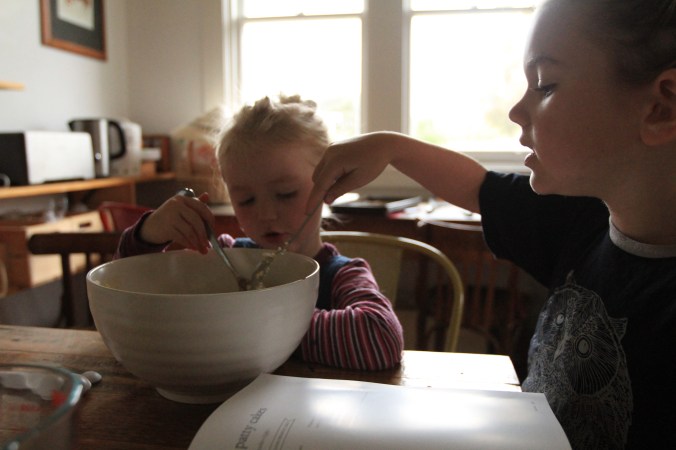
First get measuring and mix up a cake batter, any think cake batter will do, but we used this slightly modified recipe from the Country Women’s Association Cook Book (that I’m proud to report 3yo Elka corrected me to: ‘Country Women’s and Men’s cookbook’ – I’m glad to see equality going both ways in my young lass!)

RECIPE:

  • 2 Large tablespoons butter
  • 1 cup sugar
  • 2 eggs
  • 2 cups self-raising flour
  • 3/4 cup milk

Mix all. Bake at 180 until a skewer comes out clean.

IMG_4308IMG_4335

We doubled this recipe (making 2 sides of the globe) though I have left it in it’s single form. The task of doubling the recipe was given to the 5yo, who (on top of the usual measuring and mixing) enjoyed the challenge of a little extra numeracy. The fraction was a little too advanced for her, but she was able to deduce that 2 halves were one cup, and 2 quarters were half when it was broken down for her. Fractions is not really something that she needs to concern herself with in terms of formal learning, but introducing the concept in relation to cooking (where there are so many fractions!) is a great place to begin to build her understanding.

IMG_4371

We then separated the mixture into 2 bowls and each child was responsible for mixing the colour for a different layer in the centre of the world. One for the inner core (red) and the other mixed the outer core (yellow/orange). This sense of ownership (and also colour reference) came in particularly handy when we re-visited the concept of layers later.

We then poured our otter core (yellow mixture) into the ‘ball tin’ (yes, I bought a ball tin on impulse years ago and it gets very little use – 2 rounded bowls would be just as effective!)
IMG_4421IMG_4428

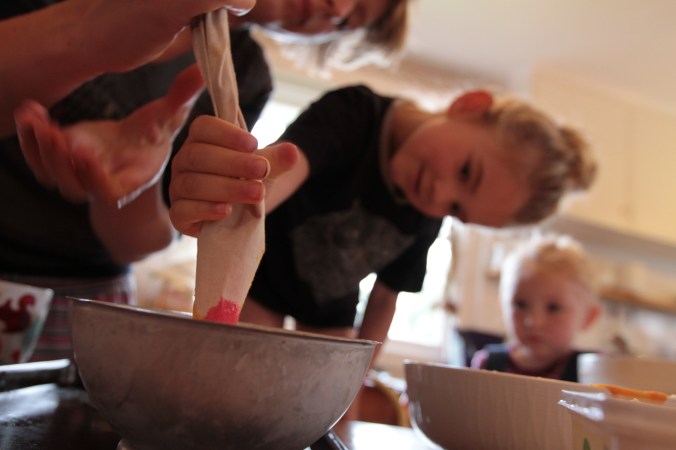
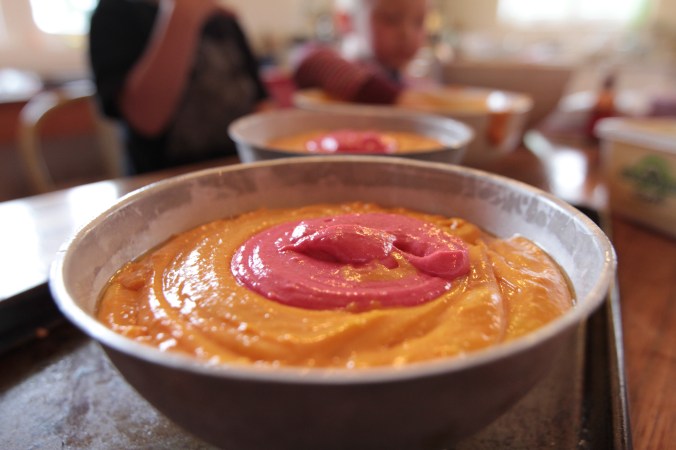
We piped our inner core into the centre of each tin, and then popped it in the oven.

Due to the nature of cooking both colours at the same time the exact shape of your core will be a little unpredictable, but the thick mixture should hold it’s place fairly well. (Plus the neater alternative of cooking 2 separate cakes and ‘nesting’ the cakes during the icing process is far too complex for me to attempt with children!)
IMG_4451

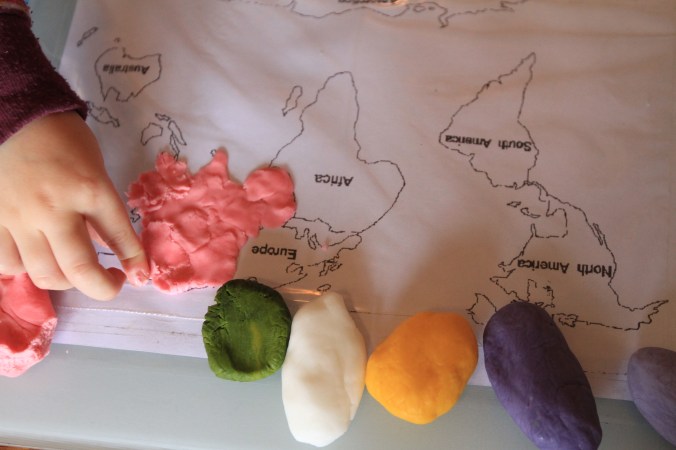
We then iced the world in blue butter icing, and made some (roughly shaped) continents to place on our world. To create the continents we printed this map, taped it down with clear plastic on top. The kids then filled the continent shapes with fondant (we happened to have some coloured fondant left over from a cake, but most supermarkets also stock batches of ready made pre-colourd fondant in an easy pack).

IMG_4452

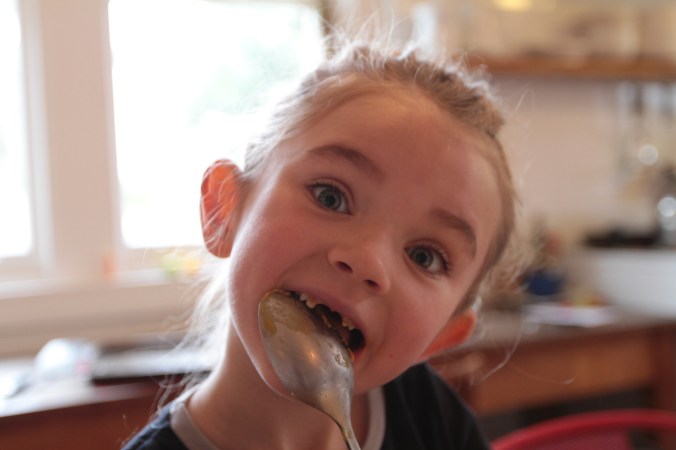
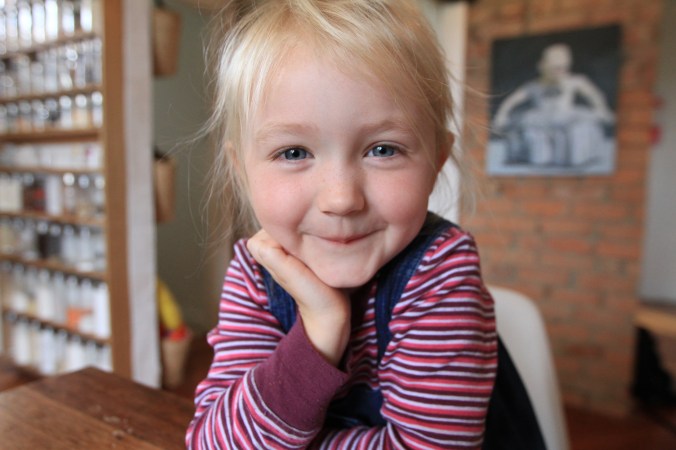
Elka (3yo) particularly enjoyed making these play dough like shapes out of fondant – though she did ‘accidentally’ eat Australia (see the photo of her face just as she was caught popping Australia in her mouth!)
IMG_4458

The kids learnt the continents more than I thought they would from this exercise, more than I thought they would. They also took a lot away from the concept of a world made out of layers. When entering a cave they asked if we would get far enough down to see the lava, and each time we talked about the layers after they would tell me ‘that’s the one I mixed’ and so on.

IMG_4770

THINGS TO SEE AND DO: VISIT A WORKING WATER WHEEL AND MAKE ONE TO TAKE HOME.

We’d like to note that W is also for Whisky, and while taking children to a distillery is not usually seen as a positive parental moment – that’s exactly what we did and it was fantastic!

IMG_4104 

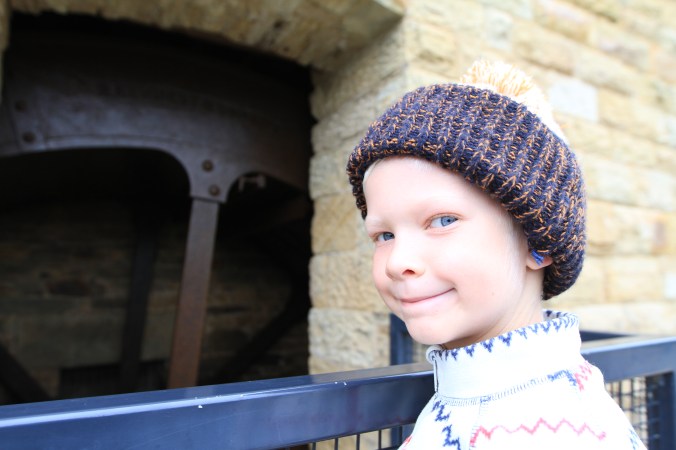
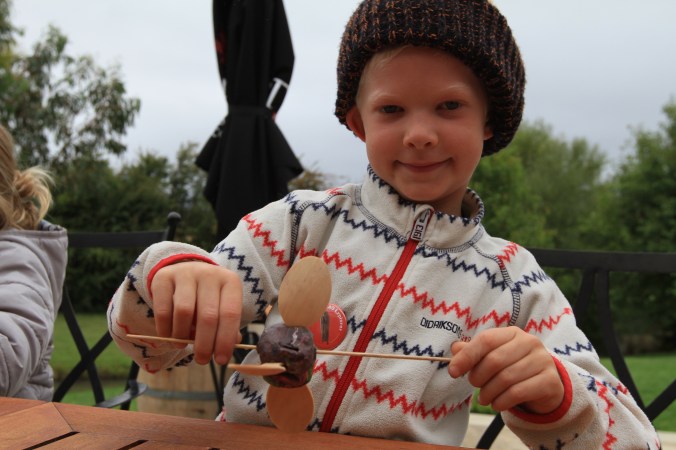
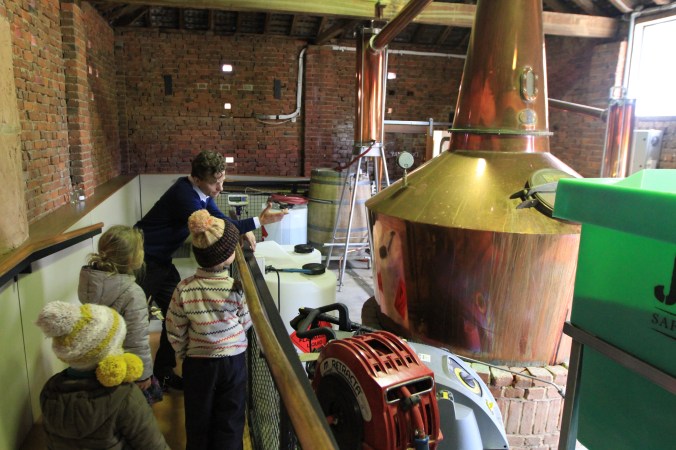
Nant Distillery has one of the oldest functioning water wheels in Australia and is well worth the journey just for the sake of the kids – even if you don’t like Whisky yourself! (Nant is in Oatlands, about 1 hour road trip from Hobart). The entire mill (originally used to mill flour) has been fully restored as a working barley mill. The water wheel is made up of original parts and is easily seen from the outside (where the stream moves the wheel) and shop area (where you can see the cogs turning as result of the water moving the wheel). All this is free and visible even without a tour of the building. We were lucky enough to be spotted making our water wheels and the kids were given a full tour of the premises by the friendly staff before we sat down for hot chocolates… truly a wonderful day for the whole family!

IMG_4146

Now, while I whole heartedly recommend making a family day trip to Nant to check out the function of a real water wheel, here’s an activity that you can do in the bath if you don’t happen to make it to Oatlands today.

IMG_4136

First grab your supplies:

  • Moulding clay
  • Disposable spoons
  • A smooth stick

IMG_4133

Now to construction:

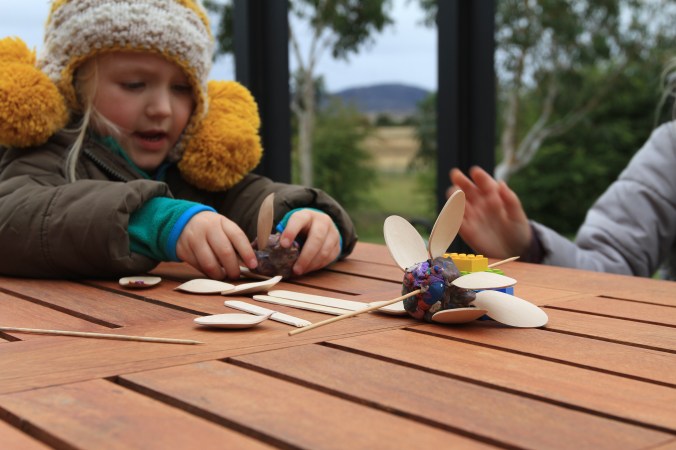
  • Form a ball of moulding clay around the middle of your stick (ensuring that it is fairly evenly weighted around the stick)
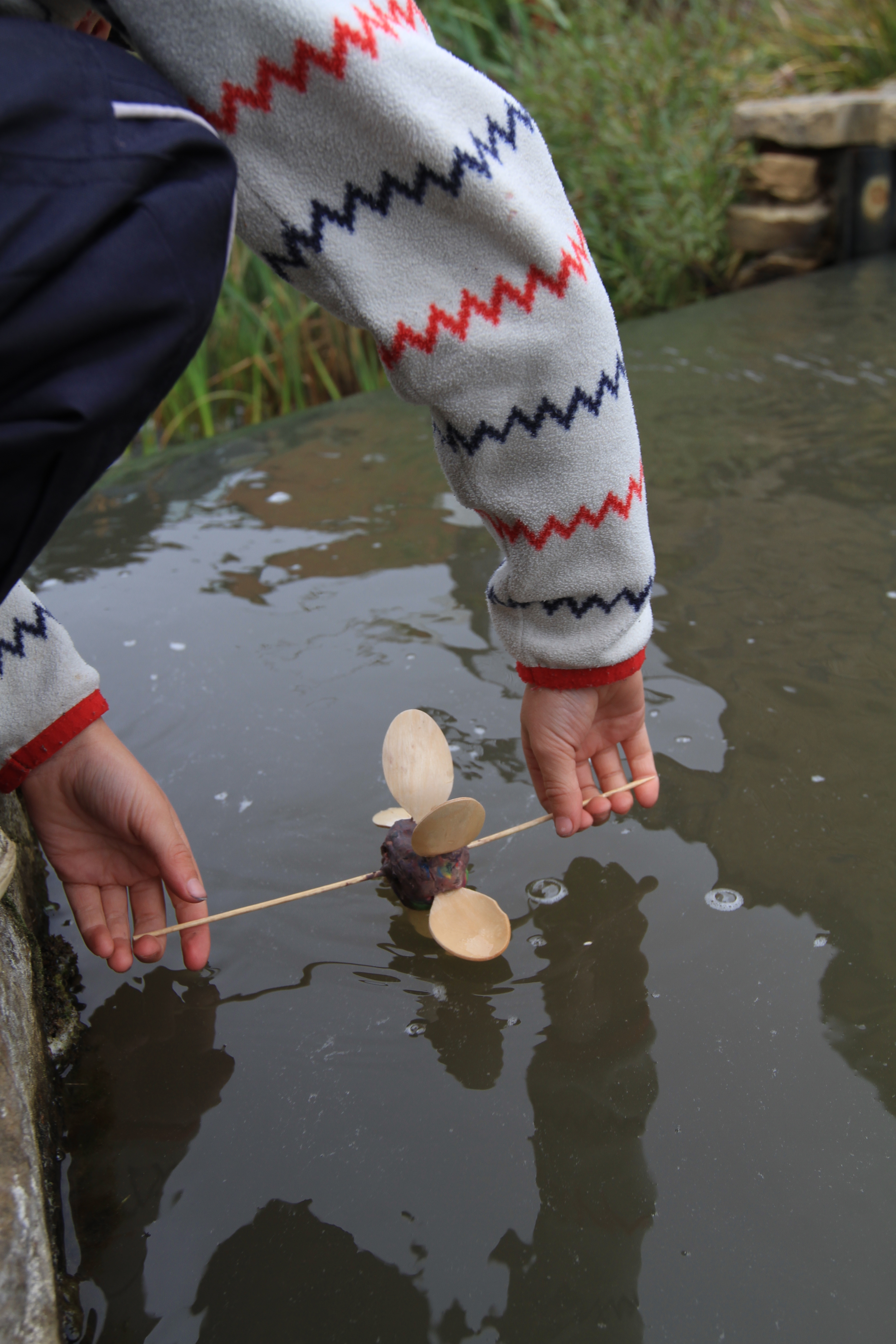
  • Insert the tops of the spoons (handles removed) into the moulding clay at even spaces (ensuring all are facing the same way when turned, as in the pictures – after a little trial and error this little engineer found that the 3 ‘paddles’ as shown here work better for us than the theory of many paddles.)

IMG_4131

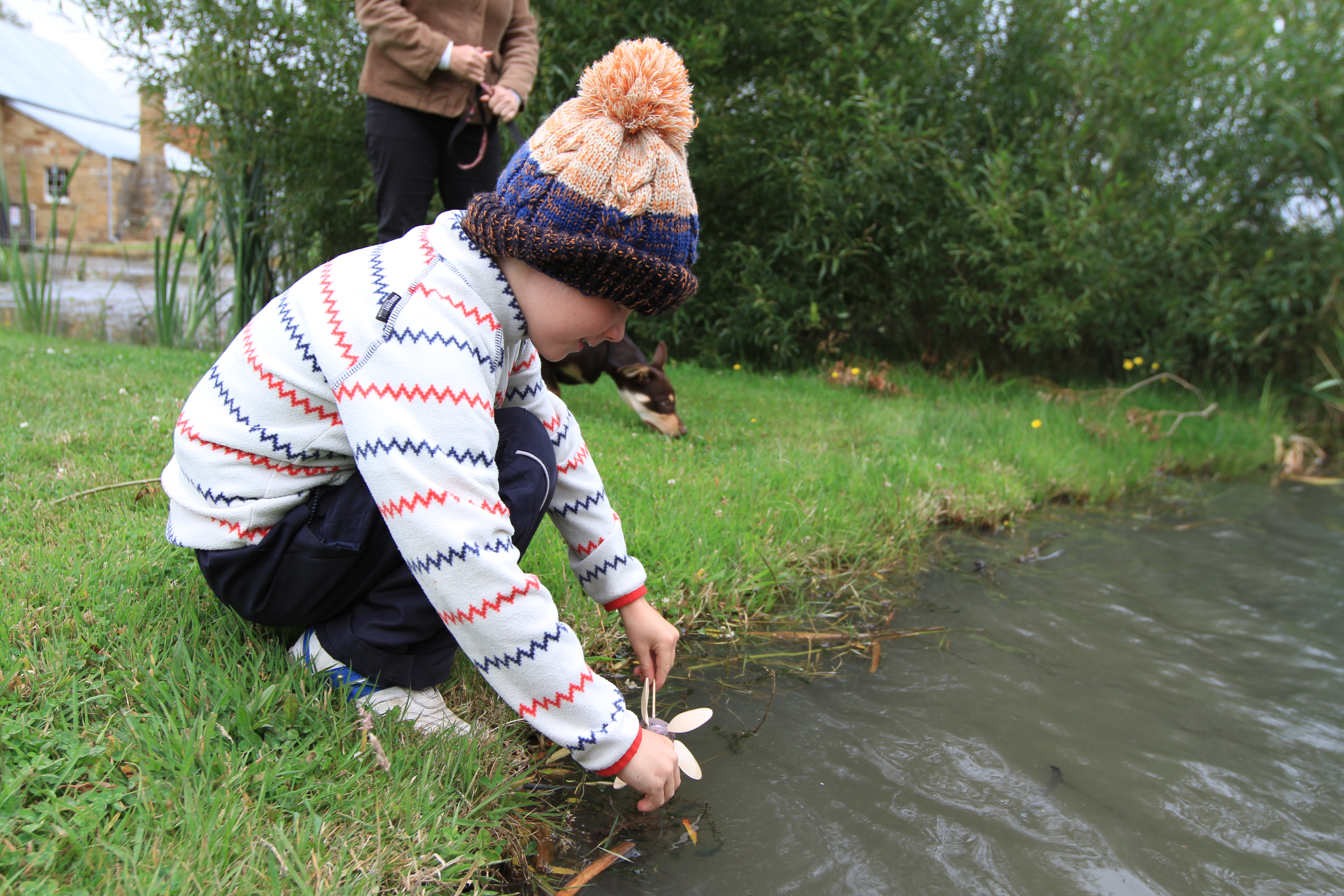
Your water wheel is made! We first tested ours in some still water to see what would happen (nothing) then in some slow moving water (still nothing). We asked the kids what they think needed to happen to help move the wheel around. Faster water!

IMG_4037

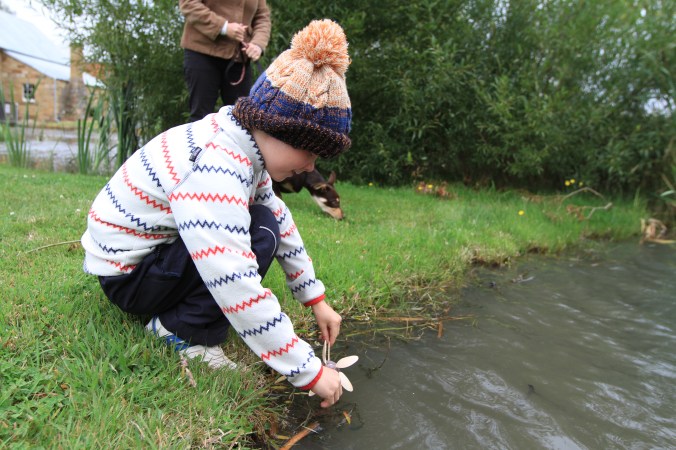
When held in the faster water we were delighted to see it spin rapidly, turning the ‘shaft’ in our hands. (We loved the small waterfall flowing though the grounds for this, but a tap or watering can could provide the same result for your water wheel if you are doing this at home.)

IMG_4118

We talked about how that energy could be used. To make power was the favourite answer (after our talks about wind creating power).

IMG_4057

At this point we moved over to the real water wheel to see how the energy could be transferred to cogs to mill barley. (See the photo above for Anica’s reaction when it began to move by the power of the water in the stream!)

We were then also guided through the rest of the distillery to see how the barley is ground, and eventually made into whisky. The mechanisms are beautiful to admire, and our guide perfectly matched the informal nature required for a tour group as young as ours!

IMG_4102IMG_4099

A wonderful day out that was finished with a hot chocolate and gallivanting around the greens.

IMG_4149

Our trip home was the perfect time to chat about what we had seen, think about how much power water holds, what water is in different forms (ice, liquid, steam etc). We also touched a little on the gravity that makes water always run to the lowest point (gravity of planets being a recurring theme but a new and rather abstract concept for the kids when talked about previously in our space activities.) The car is always a nice place for questions, and after our activities the kids had plenty!

EASY ACTIVITIES TO BUILD YOUNG BRAINS: MAKE A WATERMELON WHALE.

IMG_4827

Pumpkin carving has captured the imagination of generations, but in the heat of an Australian summer it seems far more appropriate to carve a watermelon whale:

IMG_4734

  • Firstly obtain a whole watermelon. (Most supermarkets will have them available; just ask if there are any out back if there are only pre-cut ones on the shelf)
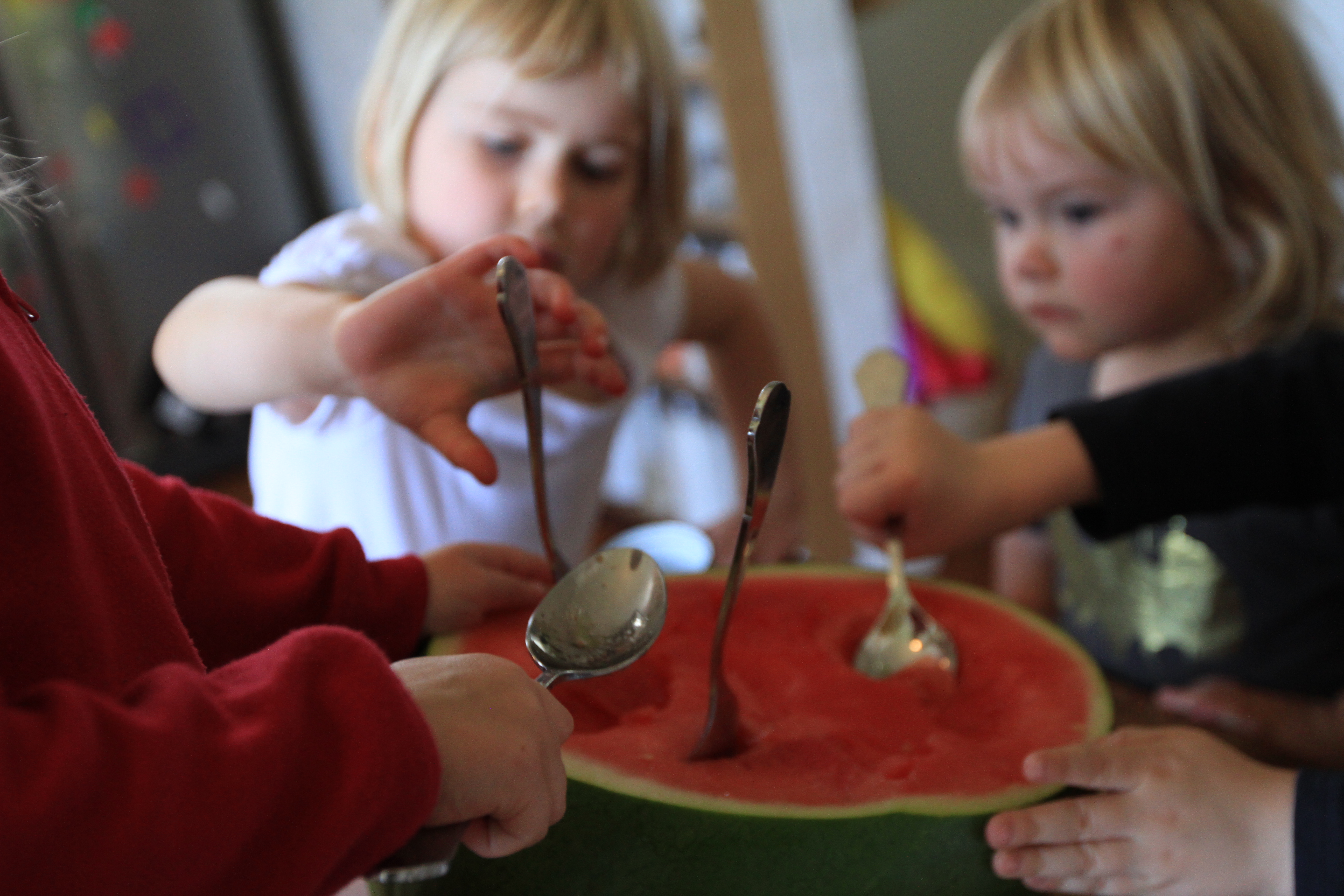
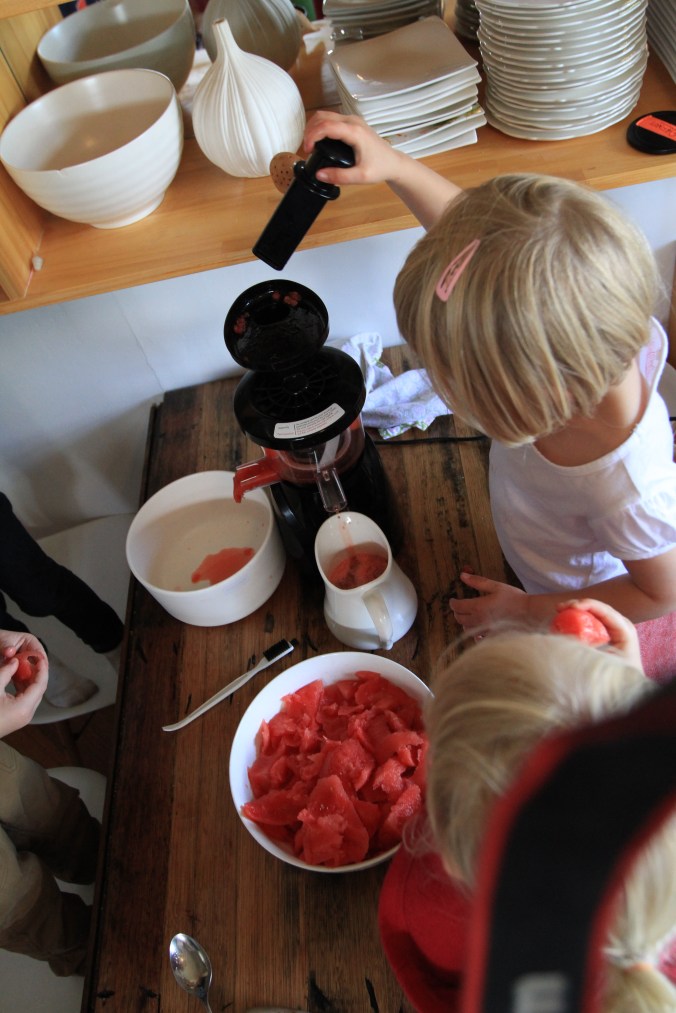
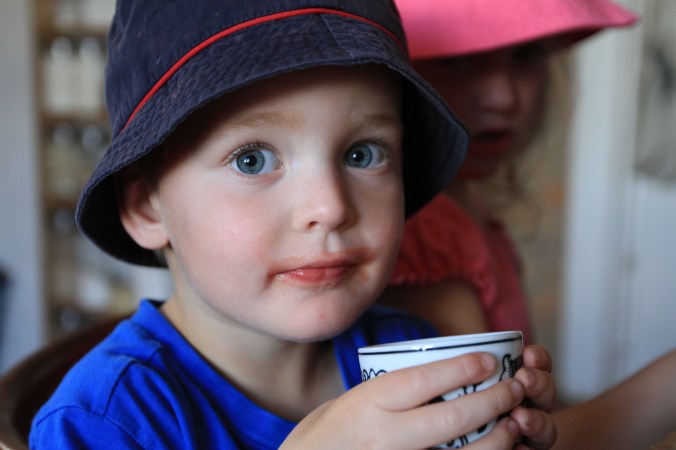
  • Cut off the base and have the children scoop out the flesh. (This flesh can go strait into the juicer to make a refreshing beverage – obviously this was much enjoyed as the productive little people set up a production line taking turns to make the juice!)

IMG_4740IMG_4750

  • Cut a ‘mouth’ wedge from the front of your whale head. (Fashion some teeth at this point if you so desire)
  • Use part of the wedge that you have just removed (from the mouth) to fashion a dorsal fin (if your species of whale has a prominent one). We used the ‘base’ as a tail.
  • Cut some eyes and a blow hole (a good time to talk about how they are mammals like us and need to surface to breath).

IMG_4759

Congratulations, your whale is finished! Fill with fruit salad if you wish, surround with blue jelly water if you feel like a bit of extra sugar. (We put a candle in ours as a glowing lantern. (Anica recalled the tale of Pinocchio at this point, though others might be more inclined to go with a religious tale, or perhaps Moby Dick.)

IMG_4850

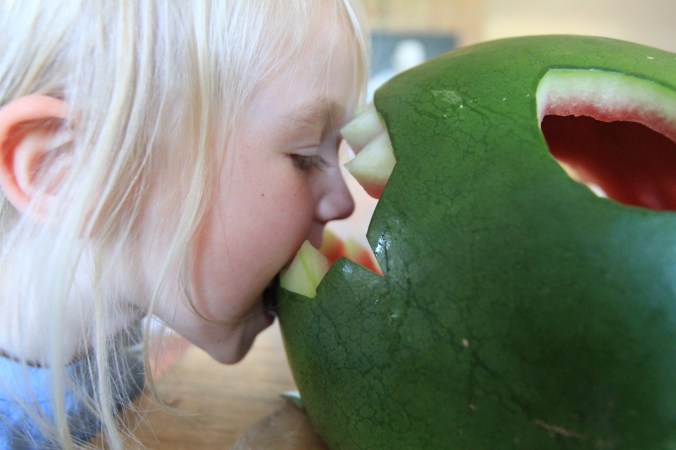
Our whale was carnivorous and Anica thought it was hilarious when it ‘ate her arm’ (she photo above). Elka, however was later found eating the whale’s teeth one by one, she REALLY likes her watermelon!