EASY ACTIVITIES TO BUILD YOUNG BRAINS: STARDUST PLAY DOUGH GALAXY.

IMG_3493

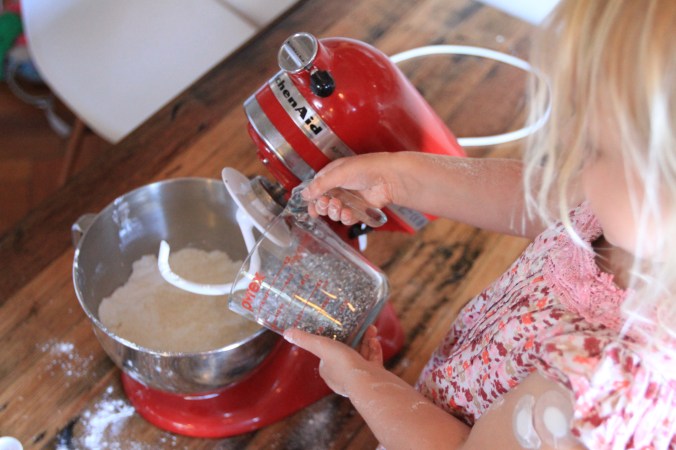
We’ve talked before about the benefits of cooking with children, and we all know the benefits of playing with dough… adding a little glitter to your next batch of playdough just brings a bit of sparkle to the imagination (and the kitchen!)

IMG_3382

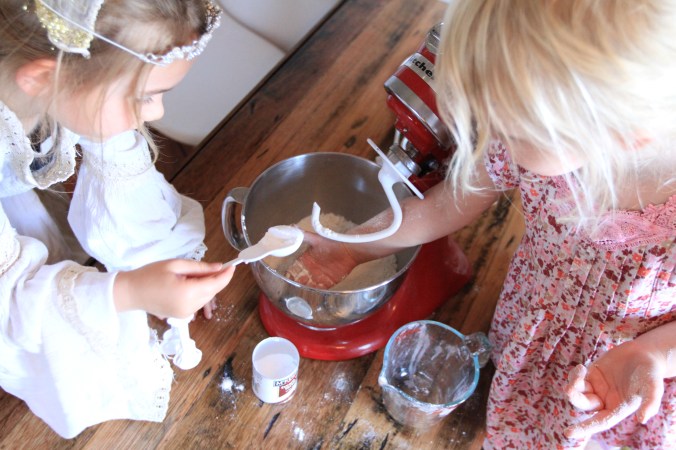
Use your standard play dough recipe.

I use the one below, though any will do:

  • 2 cups plain flour
  • 1 cup salt
  • 4 tbs cream of tartar
  • 2 tbs oil
  • 2 cups [boiling*] water

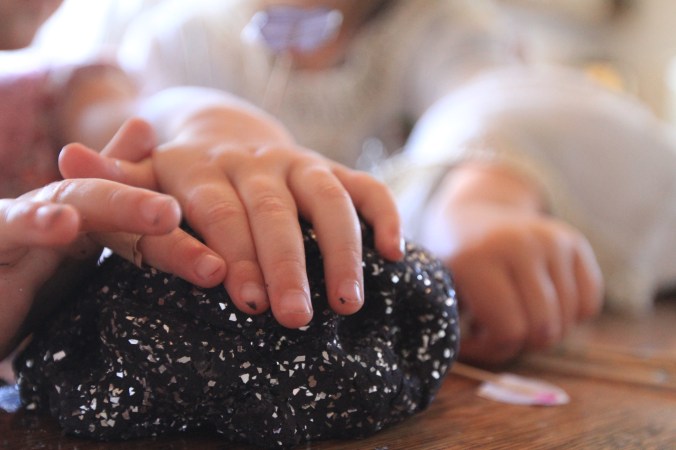
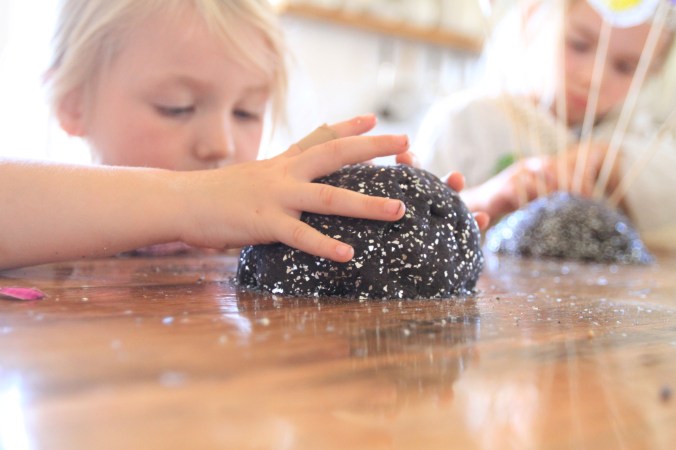
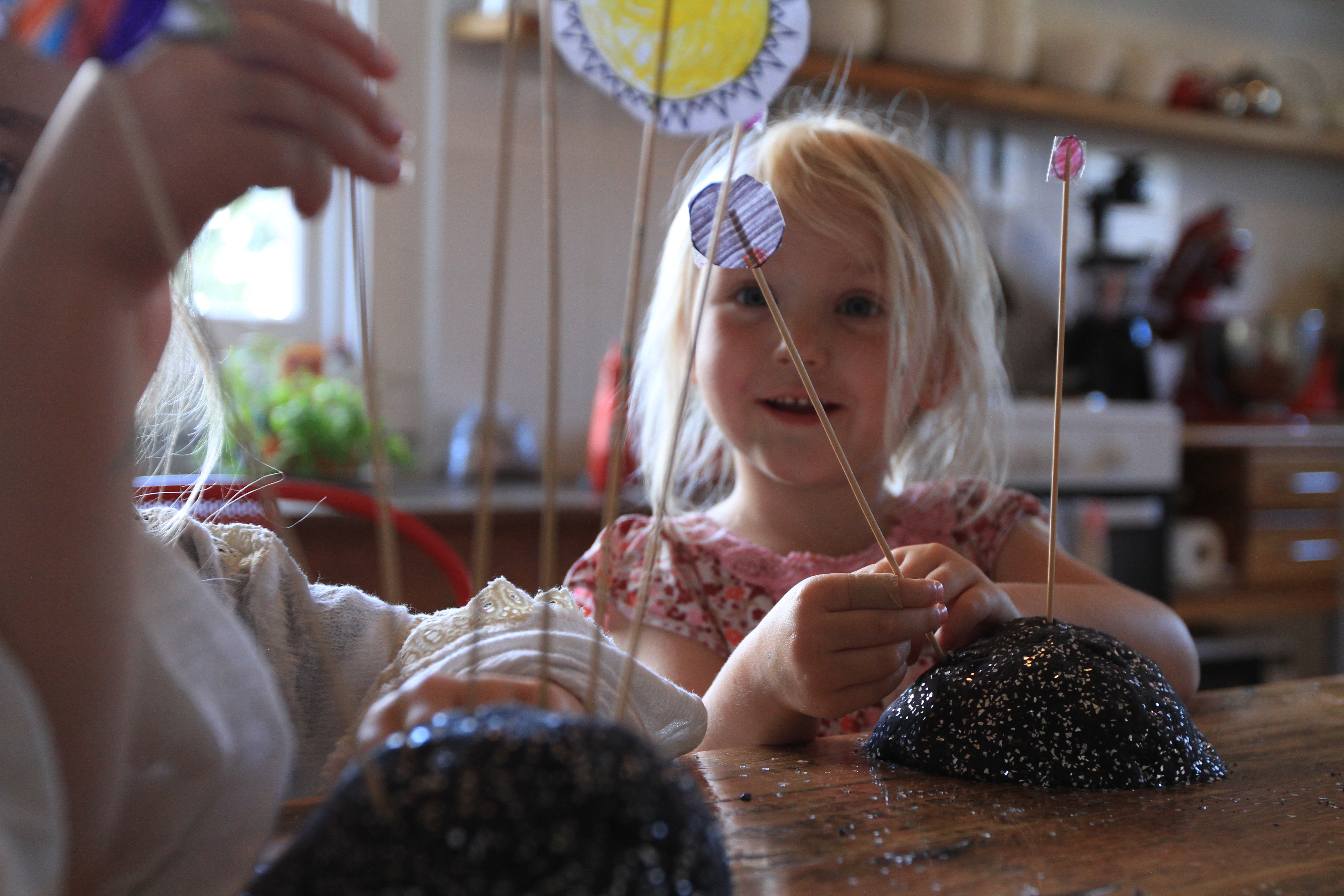
Then to create ‘ stardust playdough’ simply add the left over glitter from your sparkle writing tray, and a splash of black food colour.

IMG_3387

*Due to laziness I personally opt to boil the water before adding to the mix, thus I don’t need to stir a hot pot on the stove, but instead just leave it churning in the mixer until it is fully combined. I find this better for my own process, but also easier for the kids to be involved. If a little sticky I add a pinch more flour until it reaches the right texture.

IMG_3403

After mixing give the dough to the children so they can get those little fingers working while they finish kneading the still warm dough (I’ve found kids explore the warm dough differently to once it is cold). Then simply let them go wild with what ever their minds dream up. We chose to bring out our planets from our solar system adventure so the older created a mini solar system in her dough, while the younger acted out scenarios between the planets.

IMG_3481

Once you have finished with the playdough remember to wrap it so that you can use it for many days to come. There will be a bit of glitter lost each session, but I think the delight of playing with it is worth a few extra sparkles floating around the house.

THINGS TO SEE AND DO: SORELL STRAWBERRY FARM

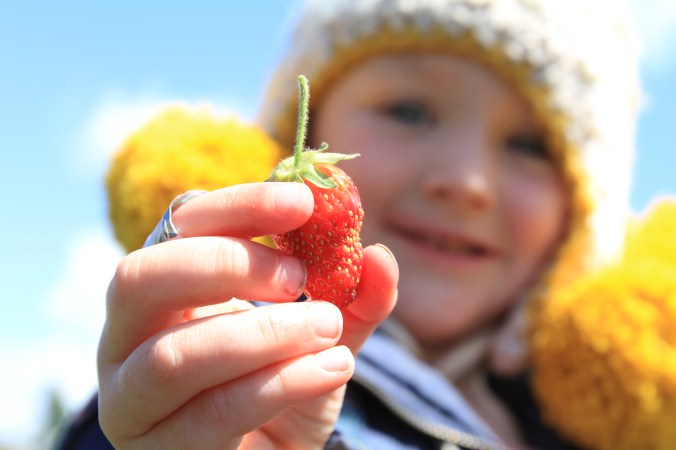
A Sumptuous day of picking strawberries in the sunshine, who wouldn’t enjoy that!?
IMG_3633

Somewhere along the line we (collectively) stopped producing our own food in favour of supermarkets. While many families (ourselves included) are bringing back a bit of token home grown produce to the table, the true art of gardening for sustenance is not as common as it once was.

As a result, a growing trend in teaching kids about the process of ‘paddock to plate’ is emerging as an essential learning area to cover in the early years. This is a concept we will re-visit regularly throughout the year… And strawberry picking surely has to be one of the tastiest and most enjoyable ways to get started!
IMG_3745

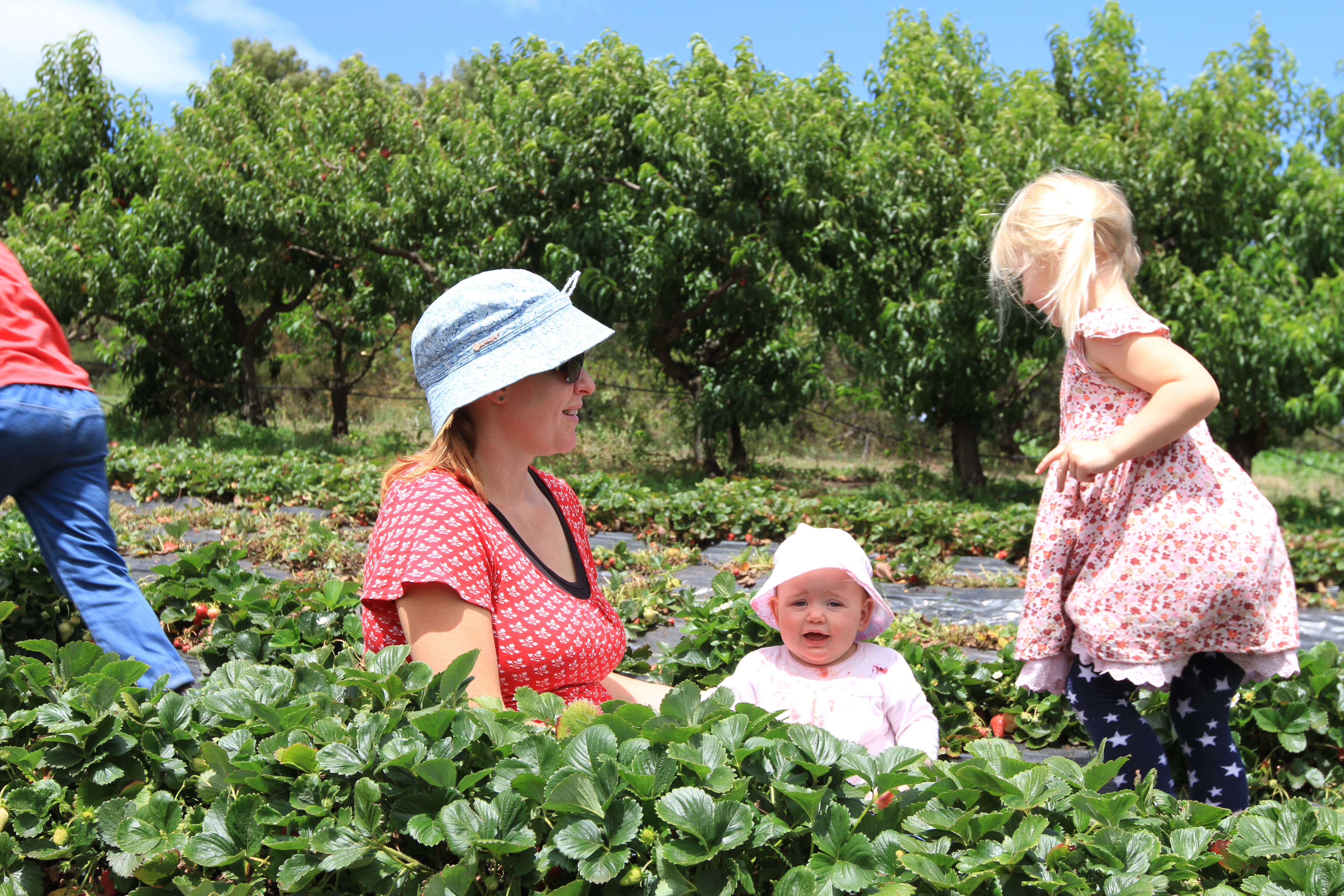
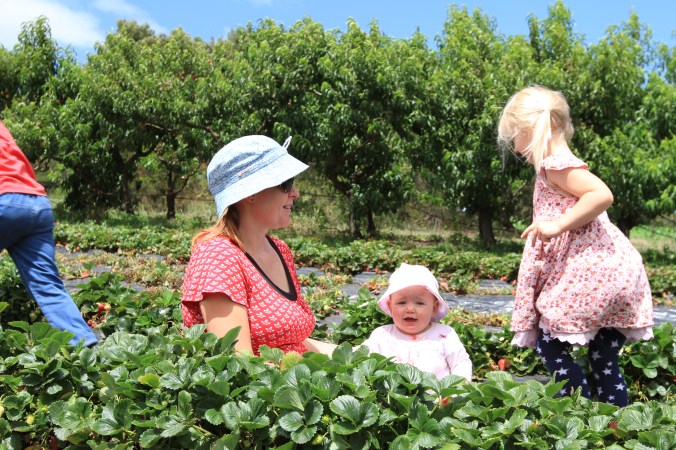
Just past Sorell, this fruit farm was perhaps the children’s favourite experience yet. We met at tthe entrance, paid our entrance fee, and then were let loose to pick as much as we desired (provided that we didn’t leave with more than our container full – eating as much as you can on the farm is entirely encouraged.)

The costs are:

$13.50 per adult

$6.00 per child (3yo and under free)

By the time we left I had no doubt that we had well and truly got our money worth. We were at the farm for about 5 hours, exploring the different fruits at various states of growth, picked continually, filled our containers and our bellies with an array of fruits and all 5 kids were fully engaged throughout process.
IMG_3652

So while we left with a tub of berries each, we achieved far more than the acquisition of fruit:

  • We expanded our berry tasting pallet (even the pickiest eater was willing to try each new fruit that we came across while in this environment, and she found a new berry that is her favourite food now!)
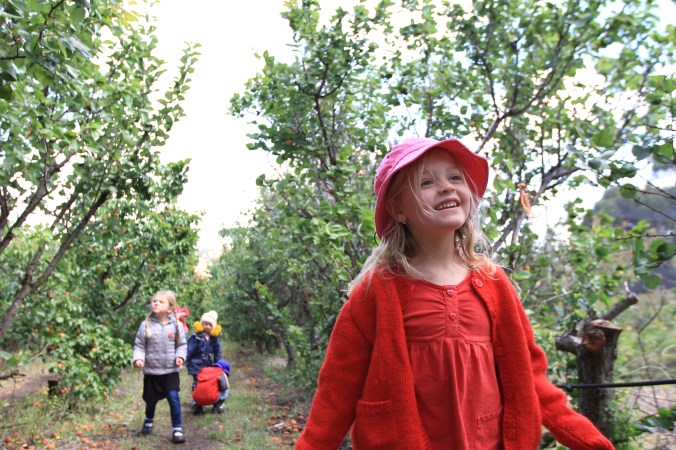
  • We ran, laughed, jumped through the rows (with fairly good sight lines the kids had a little more freedom to explore independently while we could still see them easily). For young children the responsibilities to explore freely with friends are few and far between!IMG_3679
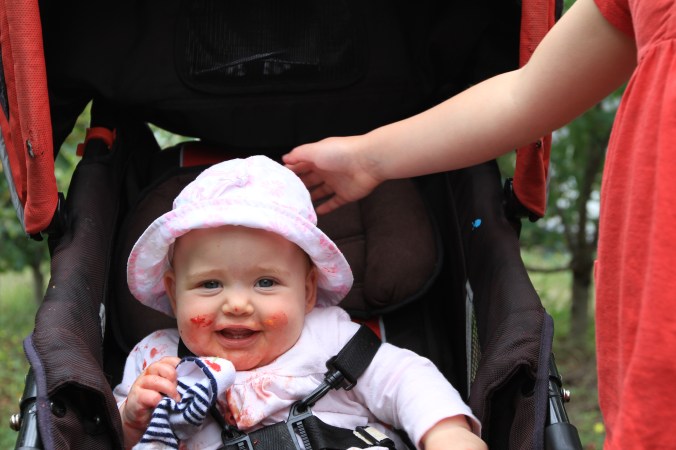
  • We searched, spotted, assessed for ripeness, plucked and tasted each fruit. The day was like a giant tasty tactile game of hide and seek, even the youngest member was delighted with this sensory rich experience.
IMG_3719

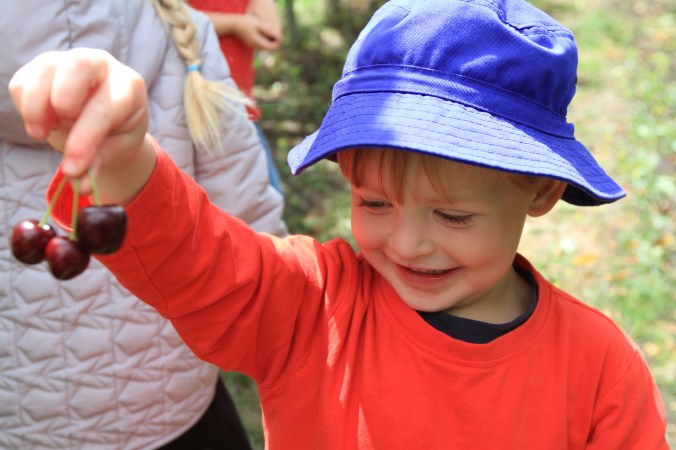
  • The kids asked lots of questions and we all expanded our technical fruit knowledge. (The different kinds of bushes that different fruits grow on, what shows us it is ripe for different fruits, what season each fruit ripens etc.) The kids (having seen corn and apples in the field near the berries) can’t wait to return in Autumn for another harvest experience.
IMG_3689

As always, learning is re-enforced by re-telling and/or acting out what has been learnt. The story telling process fires up and connects those exact same neurons almost as effectively as the actual experience itself. I’m delighted that the ‘harvesting’ has continued after we returned from the farm. We have even been treated to a ‘harvest festival’ entirely planned by the children. (With a selection of fruit, herbs (and weeds!!) that they picked from the garden – a good opportunity to hi-light that not all plants are good to eat!

With strawberry season coming to an end, get yourself out to Sorell Fruit Farm for a delightful day of exploration and learning. There are good facilities (toilets, a little shop and even a cafe) it is easy to find, open 7 days, and we highly recommend the experience!
EASY ACTIVITIES TO BUILD YOUNG BRAINS: MEASURE OUR GALAXY.

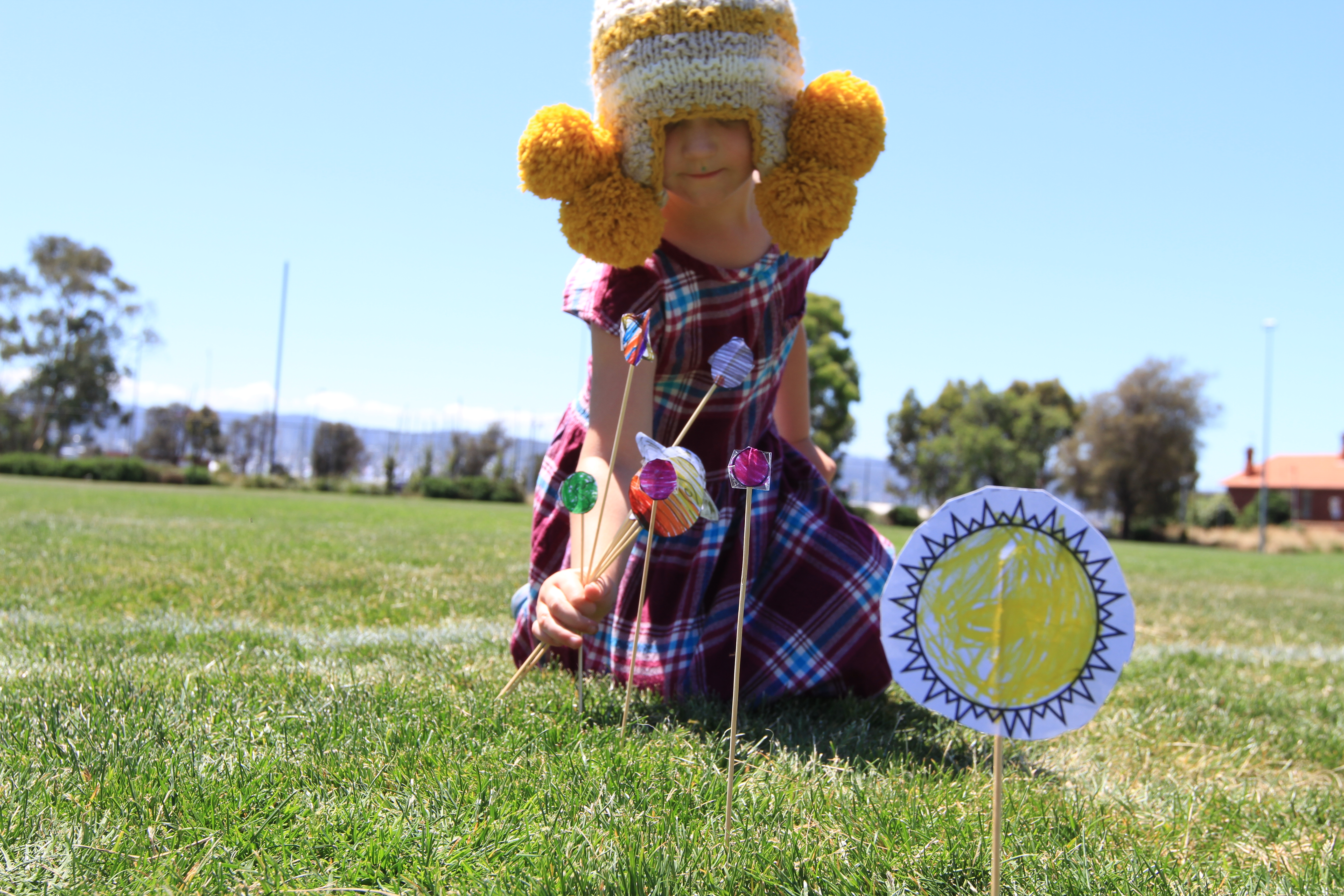
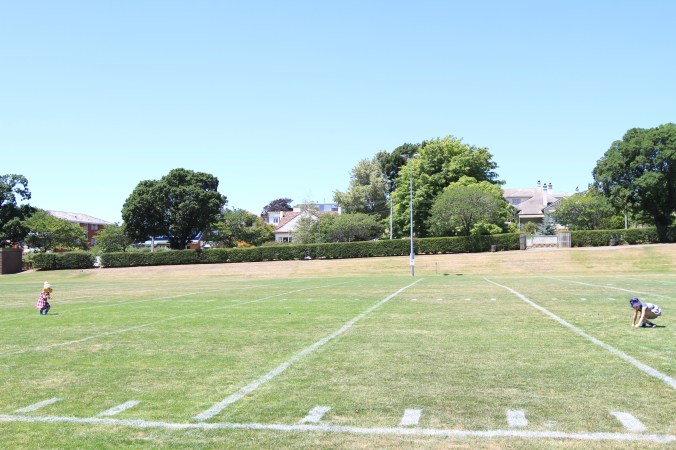
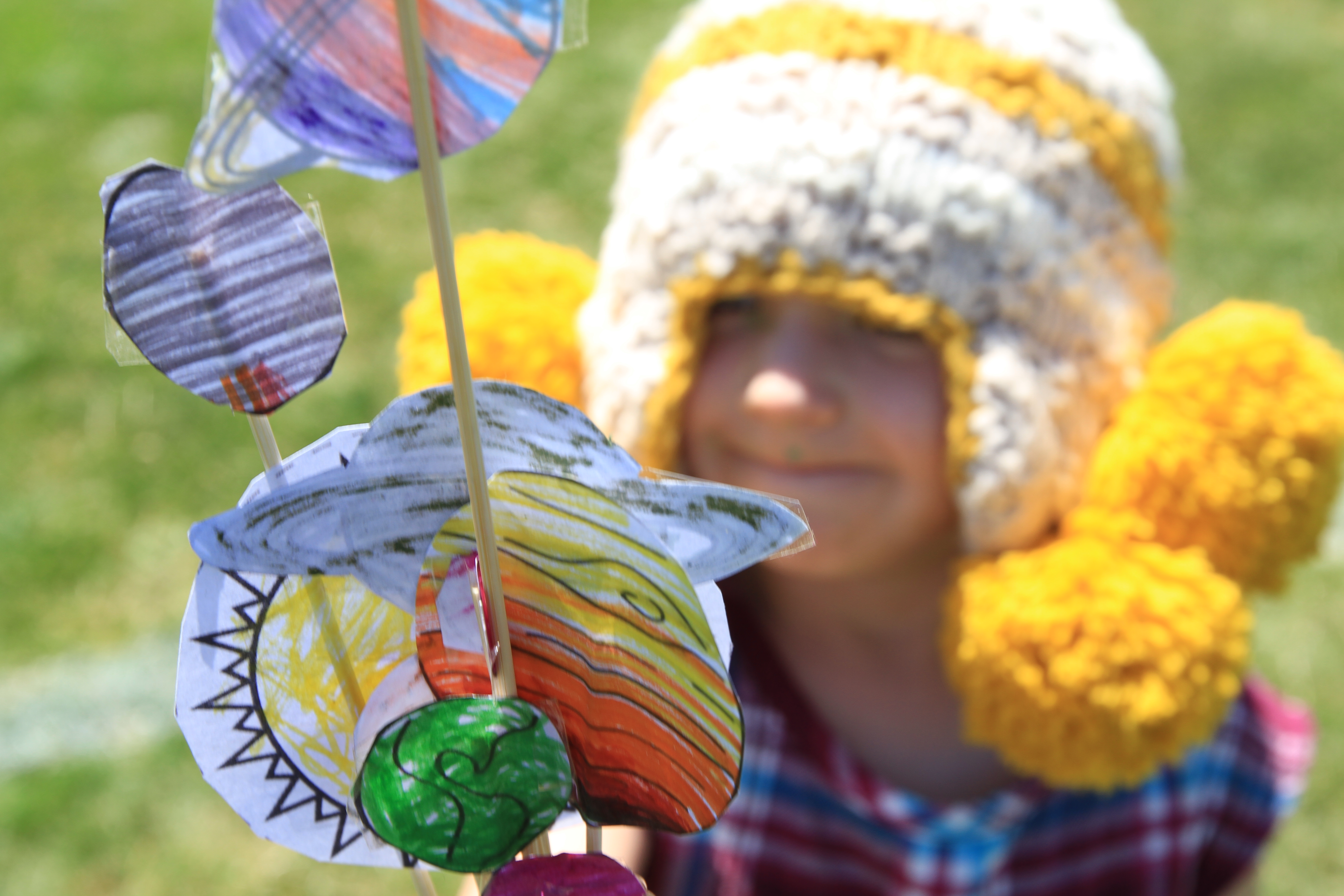
IMG_3055 Now, you’ve made a solar system – let’s get some idea of how vast that solar system is… for this you will need a wide-open space and some skewers. Initially we printed little planets for colouring. (Alternatively you could bring the solar system that you just made, but with a little wind in the air we thought it safer to opt for the smaller representation of each planet!) Attach each planet to a skewer with tape and head to a wide open space (we went to the local sports field). Place your sun in the centre of the field and begin to measure your planets. For accurate measurements of the distances between planets you can look here. We chose to be more approximate in our own measurements, with ‘kids steps’ as our form of measurement, and the furthest being 30 steps from our sun (to allow for shorter counting attention span of the 3yo!) IMG_3042 Each time you pace out your planets, place your skewer as a marker. You should end up with a little gathering of planets near your sun, then some so far away that you can barely see them! (Well, 30 large steps away at least!) Before you head out you may like to watch this demonstration that I was delighted to find (after doing ours, but still great to watch!) – he did it on a slightly larger scale but has some great facts about the planets that you might like to include when you are doing it with your young ones. Once all in place have a look at how long it takes to walk around the sun if you were Venus, or perhaps Mars… now how long does it take to you to move around the sun if you were Neptune! (See Neptune (3yo Elka) taking a bit of a shortcut as she orbits the sun (5yo Anica) below) IMG_3052 Depending on your young ones you may like to talk about how our Earth year is determined by a rotation around the sun. (We will be looking at weather a little shortly, so we’ll answer some of those seasons questions in the coming week!) – and make sure you bring your planets home again, they will be useful for our upcoming galaxy play-dough! IMG_3066
EASY ACTIVITIES TO BUILD YOUNG BRAINS: BUILD OUR SOLAR SYSTEM

There are many wonderful ways to represent the solar system but we chose a simple one that will stay with us as a reference point for the rest of the year.

Unless you are a keen stargazer you may want to refresh a few interesting points about the planets before you start. This is a good place to start.

IMG_3036

With research book (or iPad) in hand tell your kids the most interesting things you know about the first planet from the sun. Ask them how best to represent these qualities in their planet and get those paints mixing!

IMG_3039

Repeat this process for each of the planets as you work your way out from the sun. To re-enforce the idea of colour mixing I encouraged the kids to choose at least 2 colours for each planet. (The delight of kids learning red and yellow forms orange never grows old!)

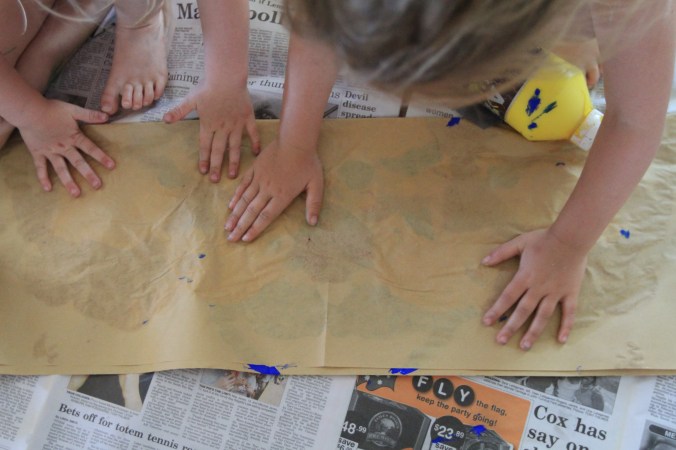
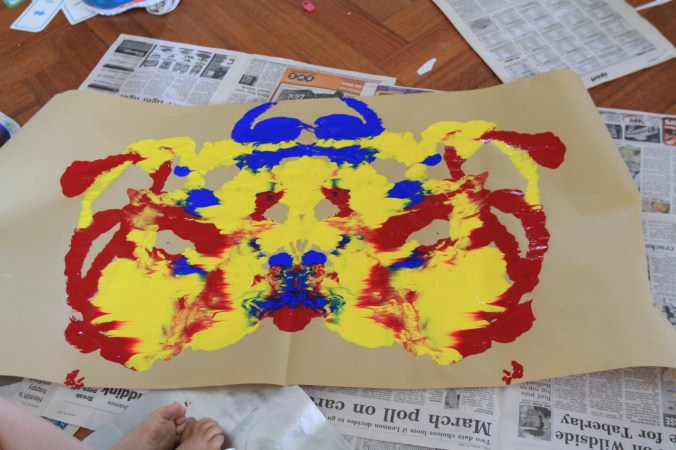
Depending on your kids you may like to mix up your paining technique to ensure each planet is a unique; we started with brushes, moved onto squish painting (where you put dobs of paint, fold the paper and squish to see what happens) and then ended up making hand prints to decorate the last of our planets.

IMG_3027

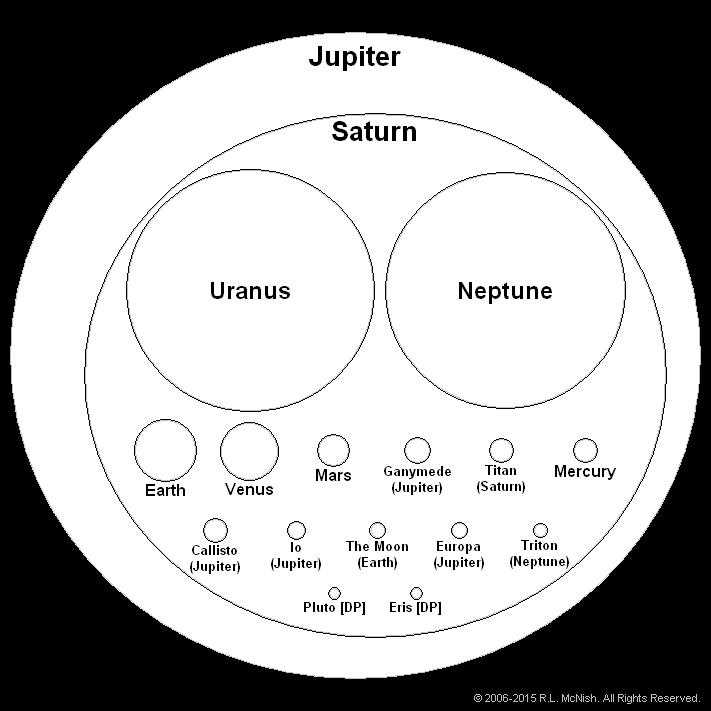
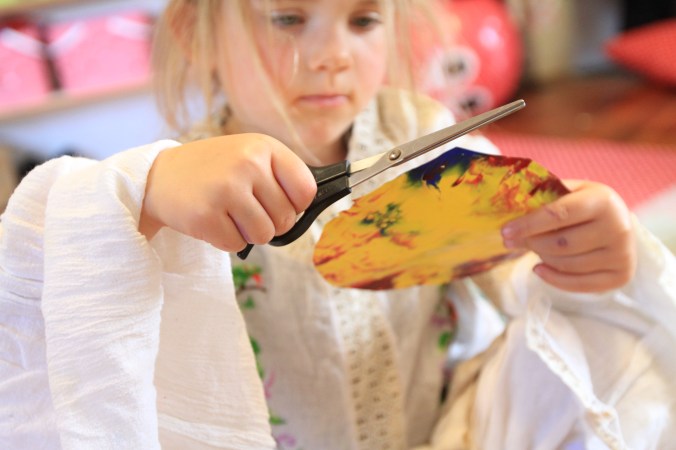
Once all are dry, cut your planets to scale. I referred to this site, with the diagram below, to get approximate scale, though found that accurate scale was not necessarily practical (I didn’t want to smallest to be the size of a pin head, nor did I want the largest to be the size of an umbrella – we compromised and made them all a little closer in size for practical reasons!)

These planets now decorate our upper walls and we have a small paper rocket (left over from our straw spaceship adventure) that visits a different planet each day, finding facts and reminding us that we are just a tiny part of this huge universe!

IMG_3371

THINGS TO SEE AND DO: BUILD A GIANT SAND SCULPTURE.

DSCN5918

Summers Bay, sunshine, splashing in the shallows, schools of small fish swimming past our feet, soldier crabs in the sand, and even the guest appearance of a stingray swimming slightly out of reach. We were delighted by the spontaneous S learning that we found at our trip to Sommers Bay (Tasman Peninsula, Tasmania). And while we’re told this is not unusual for this location it’s not something you can usually plan for in an outing. (As much as you’d like to, wildlife just doesn’t run to a predictable booking schedule!)

Sand sculptures on the other hand are something you can create at any beach (or large sand play area). Bring a bucket, spade and an (adult sized) shovel to get digging! The kids (and you!) will be amazed at what you can create in a beach trip.

DSCN5827

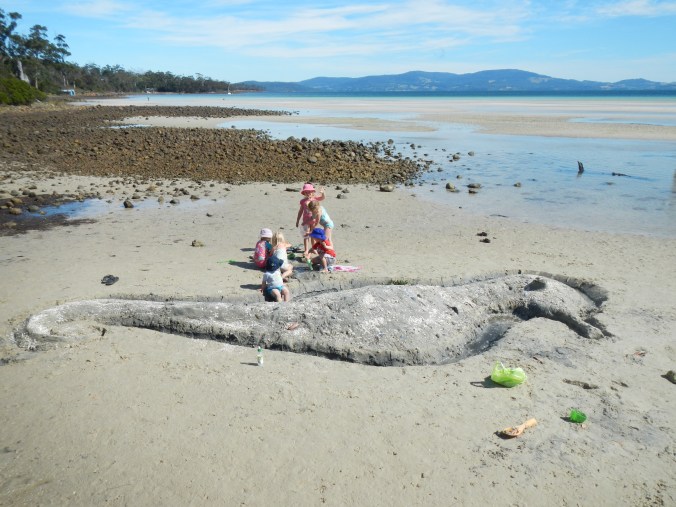
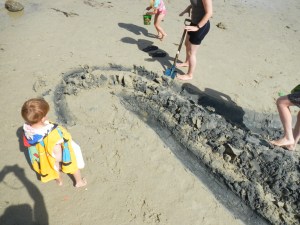
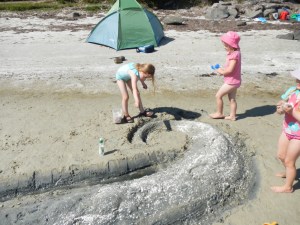
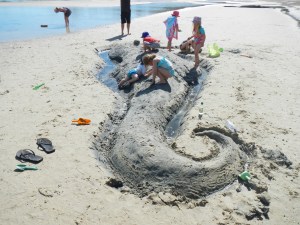
First up we chose a location, and the kids told me what to draw as I followed their collective instructions mapping out a big tummy, curly tail, long nose and head on the sand. We then all got our little spades and started to dig a big trench around the shape (piling the sand in the middle of the picture, as you would when making a mote around a sand castle.) Gradually the children tired of digging and got a bit distracted safely splashing in the shallows near us, and generally had a good time in the water. As us adults continued digging (and sharing the few facts we had learnt about seahorses!) the children came back and joined us. By the time we were ready to pat down and sculpt the shape, all the children were involved again. The giant 4m seahorse came together remarkably fast, and then much time was spent as the children decorated it with shells.

DSCN5886

The older children planned and placed and organised themselves on a mission to complete the seahorse (very important work, this seahorse building!) while the younger delighted in sticking shells in the sand.

DSCN5905

Sand play is always a winner for many reasons. It’s the elemental stages of physics, it’s tactile, it’s physical… and when done in a team like this the social development, planning, and problem solving involved is spectacular.

DSCN5895

Plus it’s satisfying. Go build a giant seahorse that will be washed away at the next tide. It’s brilliant.

COOKING AROUND THE WORLD

Last year my children and I embarked on a culinary adventure around the world, with the vastly ambitious goal to cook food from every country on the planet (that’s almost 200 countries, just incase you were wondering!)

The exercise (still far from complete!) has proved very successful in terms of capturing their imagination, and indeed opening learning across a divers range of fields.

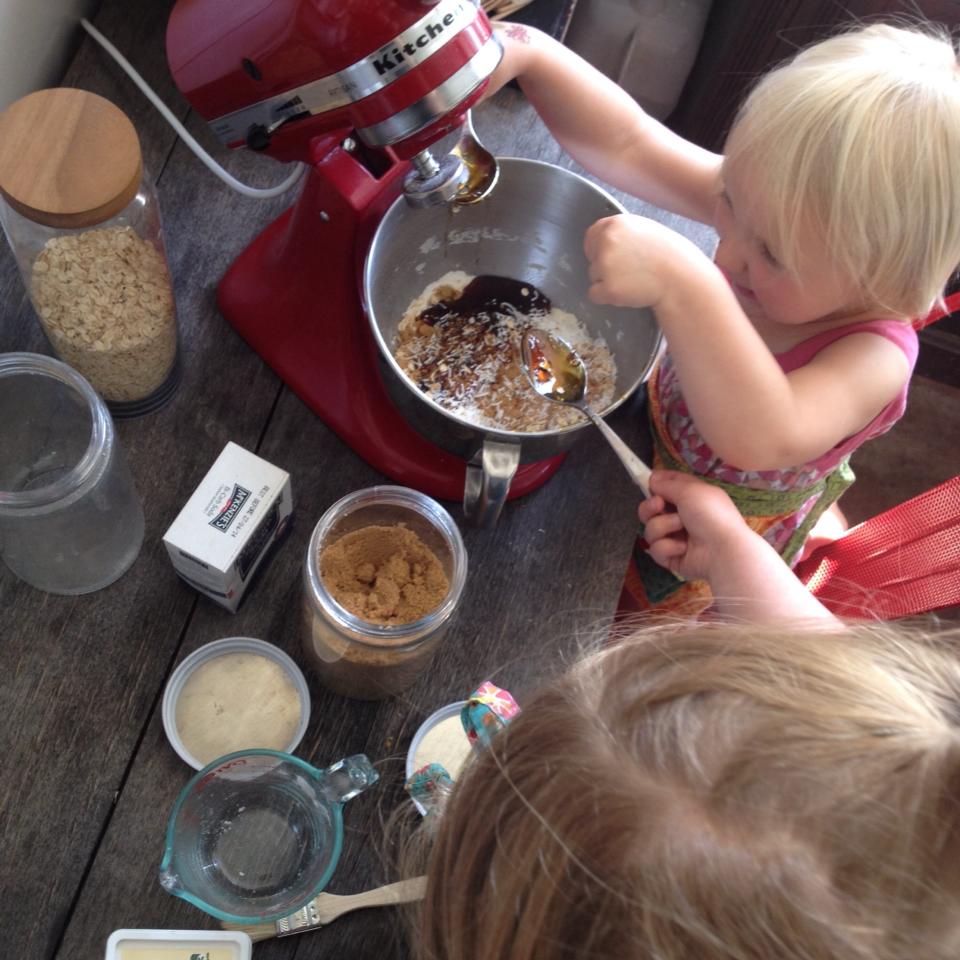
Measuring the ingredients for Anzacs from Australia.

Measuring the ingredients for “A: Anzacs from Australia.” Also a great opportunity to talk about the amount of sugar in sweets like this.

It comes as no surprise that cooking is a wonderful educational tool in itself: It is tactile (pouring, stirring, needing), sensory (taste, smell, sight), draws heavily on numeracy skills (weighing, counting, timing), scientific reactions (dissolving, heating, cooling), and literacy (from recognising the simple word ‘cup’ when measuring, right through to being able to read recipes independently) … Plus you get the satisfaction of creating something that you can eat at the end. This is probably the benefit my own 3 and 5 year olds enjoy most!

When we embarked on our culinary adventure around the world, we didn’t buy a plane ticket – instead we looked at what was in our own cupboard. From making Vietnamese rice paper rolls in the park, to investigating the origins of the pancake. Each county we ‘visited’ on our cooking journey we added a little geography, and a lot of discussion, and play surrounding that county. As a result both of my children have an expanded world view.

Continue reading