EASY ACTIVITIES TO BUILD YOUNG BRAINS: BUILD OUR SOLAR SYSTEM

There are many wonderful ways to represent the solar system but we chose a simple one that will stay with us as a reference point for the rest of the year.

Unless you are a keen stargazer you may want to refresh a few interesting points about the planets before you start. This is a good place to start.

IMG_3036

With research book (or iPad) in hand tell your kids the most interesting things you know about the first planet from the sun. Ask them how best to represent these qualities in their planet and get those paints mixing!
IMG_3039

Repeat this process for each of the planets as you work your way out from the sun. To re-enforce the idea of colour mixing I encouraged the kids to choose at least 2 colours for each planet. (The delight of kids learning red and yellow forms orange never grows old!)

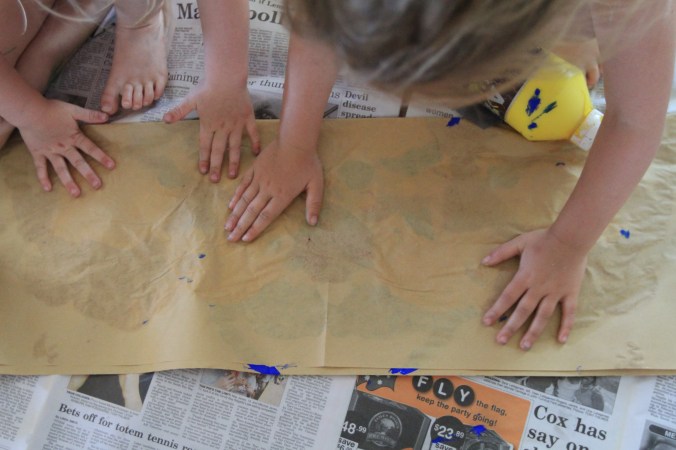
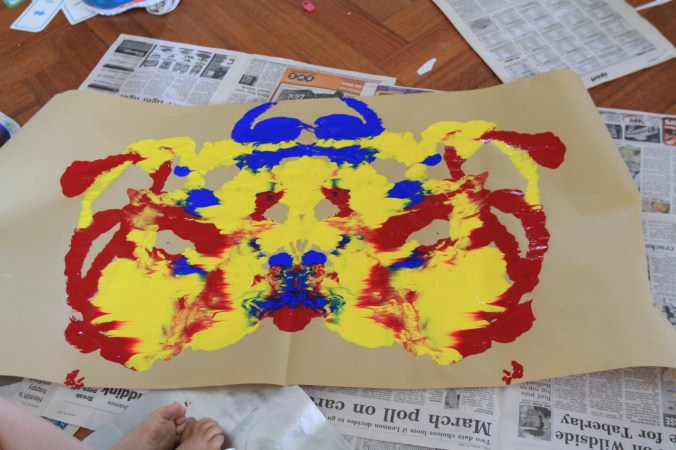
Depending on your kids you may like to mix up your paining technique to ensure each planet is a unique; we started with brushes, moved onto squish painting (where you put dobs of paint, fold the paper and squish to see what happens) and then ended up making hand prints to decorate the last of our planets.
IMG_3027

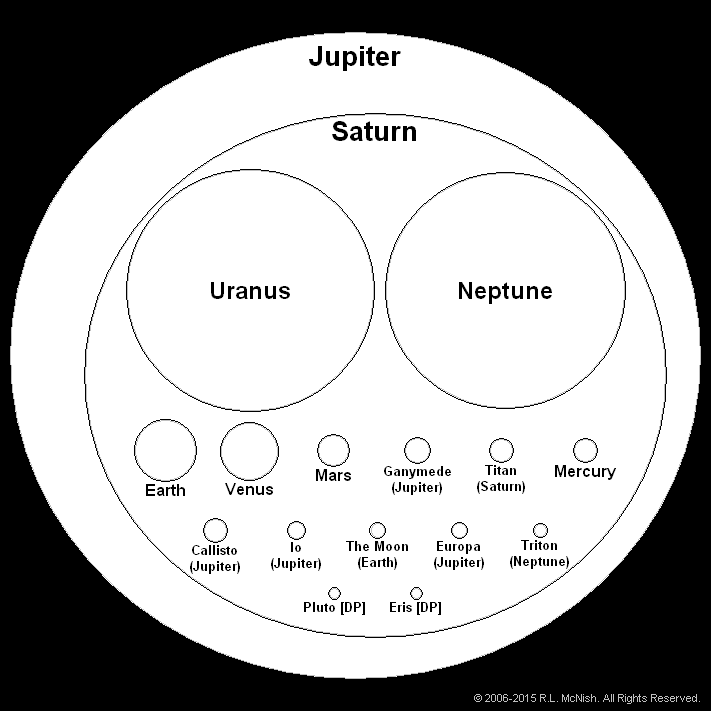
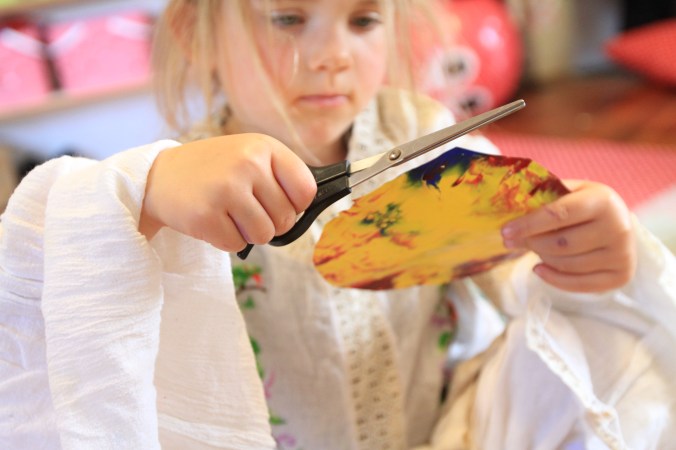
Once all are dry, cut your planets to scale. I referred to this site, with the diagram below, to get approximate scale, though found that accurate scale was not necessarily practical (I didn’t want to smallest to be the size of a pin head, nor did I want the largest to be the size of an umbrella – we compromised and made them all a little closer in size for practical reasons!)
These planets now decorate our upper walls and we have a small paper rocket (left over from our straw spaceship adventure) that visits a different planet each day, finding facts and reminding us that we are just a tiny part of this huge universe!
IMG_3371

EASY ACTIVITIES TO BUILD YOUNG BRAINS: SPARKLE WRITING.

IMG_2981

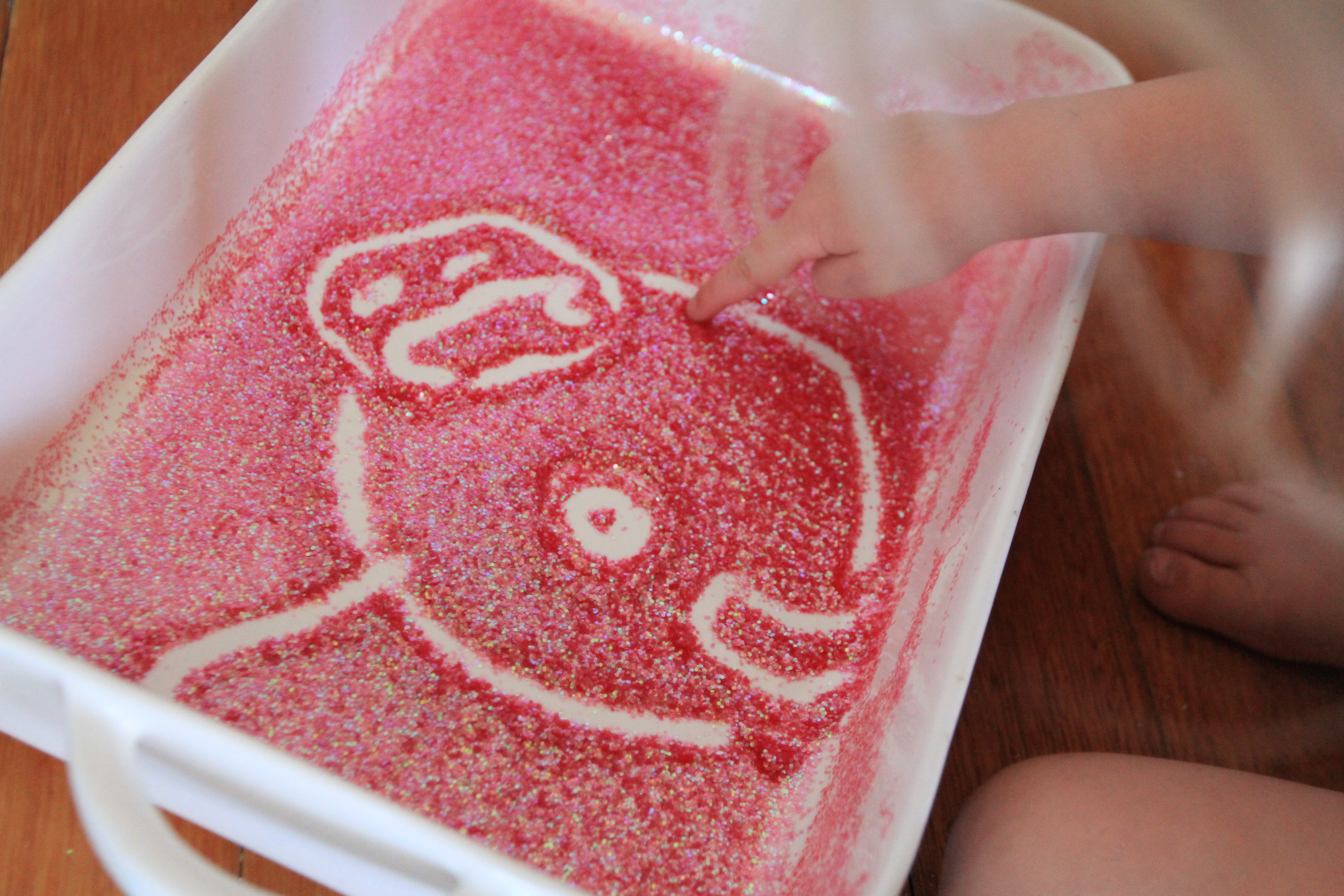
Sand writing is a lovely tactile way to learn letter shapes… but sparkle writing is something that is hard not to be excited about starting!

Simply fill a container with glitter (not too thick, you only need a couple of mm deep for the letters to form).

When they want a fresh surface to write on simply shake the container slightly and it will clear the way for more creations.

The 5yo wanted to write words, the 3yo was happy making letters and shapes (all these activities can be supported by showing an example for them to model their own work on)… but by far the most fun was had when the 3yo returned to play on her own; she was consumed for quite some time drawing little pictures by herself. It served not only as a shape recognition and letter forming practice, but also as a quite, meditative time for the kids throughout their day. Quite reflective time (forgive the pun) is essential for processing information, particularly for those with more introvert tendencies, and is as important to learning as the abundance of information and stimulation that we must also provide to their developing minds.

IMG_3023

House tip: We welcome glitter in our world, but I know many sensible people who avoid it because of the excessive cleaning up required after the fact. To my surprise this unmonitored glitter quite area did not spread (like other glitter art experiences do!) and even more astounding was that it lasted an entire week without mess. I believe the heavy container that we put the glitter in helped with this, and because it was seen as something special the kids were happy playing with the magic dust in their own time, and without spreading it!

EASY ACTIVITIES TO BUILD YOUNG BRAINS: MAKE SIMPLE BUTTON CASTANETS.

Simple button castanets are a delightfully easy way to bring a little spanish culture into your home.

spain2b

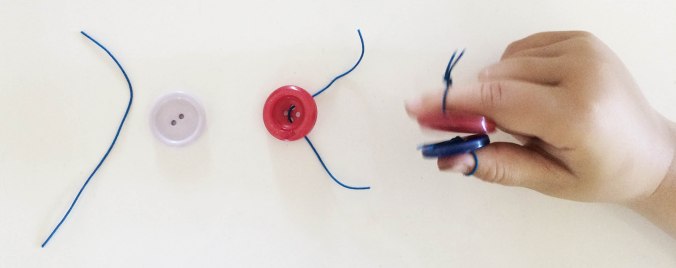
Ask your tot to choose 2 large buttons.

Give them some elastic to thread through the holes.

Tie off the back of the elastic and attach to fingers.

This takes just a few moments, then they’ll want to make a set for the other hand!

We then held a little dance performance where each child showed us their moves. What we intended as a simple fine motor skills activity with some cultural background (making the castanets) turned into a full body improvisation of spanish dance and the kids couldn’t have loved it more! (Even Anica, who typically shys away from any performance, allowed her whole body to become a proud spanish dancer – see her take the stage with gusto below!)

spain2c

Allowing children to act (and excell) out of their usual comfort zone allows those parts of the brain that are rarely accessed to get more of a look in and build stronger connections for other areas of their life. What triggers this will be different for each child, just as will the skills that are outside their comfort zone! Anica in this instance showed all the traits of a percussive, passionate, extravert in her Spanish solo – where as previously she has told me she is the best at ‘staying in the middle and not being seen’! Anica is likely to always be a little more shy than her outgoing sister, and we don’t want to change this about her, but the more she has the opportunity to choose to venture outside her comfort zone, the more she will be able to function with her whole brain in day to day life.

Without getting carried away talking about the plasticity of the brain, this applies to a variety of what we deem to be inbuilt ‘personality traits’ – Our brain changes to physically become stronger at what we are told we are and what we are allowed to do. As parents, carers and educators we have a huge responsibility to the young ones around us to explore all the possibilities of who they could be, rather than predict or label their personality and limit their ability to grow into the well rounded adults we all want to see in our future!

As an ex-dance teacher I was also delighted to see how this simple prop changed the way the children moved from a technical movement point of view. Having watched a video as part of our research last week (that showed some spanish dancing) the children instantly changed their default flowing movement (influenced by their friends mimicking ballet) into a staccato passionate movement that they had seen in the flamenco dance. Their feet stomped, their arms held power and their little castanets went wild!

COOKING AROUND THE WORLD

Last year my children and I embarked on a culinary adventure around the world, with the vastly ambitious goal to cook food from every country on the planet (that’s almost 200 countries, just incase you were wondering!)

The exercise (still far from complete!) has proved very successful in terms of capturing their imagination, and indeed opening learning across a divers range of fields.

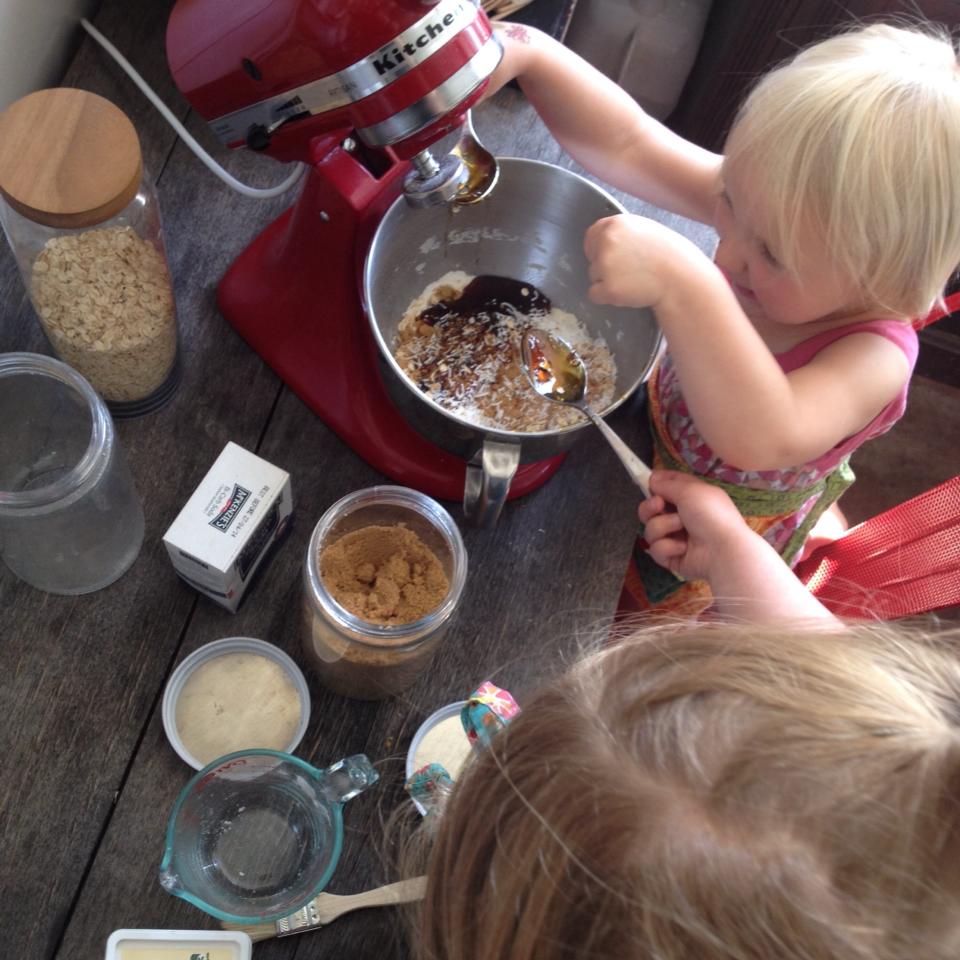
Measuring the ingredients for Anzacs from Australia.

Measuring the ingredients for “A: Anzacs from Australia.” Also a great opportunity to talk about the amount of sugar in sweets like this.

It comes as no surprise that cooking is a wonderful educational tool in itself: It is tactile (pouring, stirring, needing), sensory (taste, smell, sight), draws heavily on numeracy skills (weighing, counting, timing), scientific reactions (dissolving, heating, cooling), and literacy (from recognising the simple word ‘cup’ when measuring, right through to being able to read recipes independently) … Plus you get the satisfaction of creating something that you can eat at the end. This is probably the benefit my own 3 and 5 year olds enjoy most!

When we embarked on our culinary adventure around the world, we didn’t buy a plane ticket – instead we looked at what was in our own cupboard. From making Vietnamese rice paper rolls in the park, to investigating the origins of the pancake. Each county we ‘visited’ on our cooking journey we added a little geography, and a lot of discussion, and play surrounding that county. As a result both of my children have an expanded world view.

Continue reading